

In brief
- Cataracts are classified by the place in the lens where the clouding forms: nuclear (in the center), cortical (in the outer layer) and posterior subcapsular (at the back of the lens).
- Each type has typical symptoms and a pace of its own. Many patients have several types together.
- The main cause is age. Other factors: diabetes, long-term steroid treatment, sun exposure, smoking, trauma to the eye, inflammation inside the eye, previous eye surgery and high myopia (severe nearsightedness).
- Some of the factors can be influenced, but there is no way to restore the clarity of a cloudy lens. The treatment is the same for all types: surgery, once vision interferes with everyday life.
Where in the lens does the cataract form?
The natural lens is built like a fruit: at its center is a hard nucleus, around it a softer outer layer (the cortex), and the whole lens is wrapped in a thin, clear membrane, the capsule. A cataract can start in any of these parts. The location determines what the patient notices, at what age it starts and how fast it progresses. You will find a general explanation of the lens and of cataract in the complete guide to cataract.
The three main types of cataract
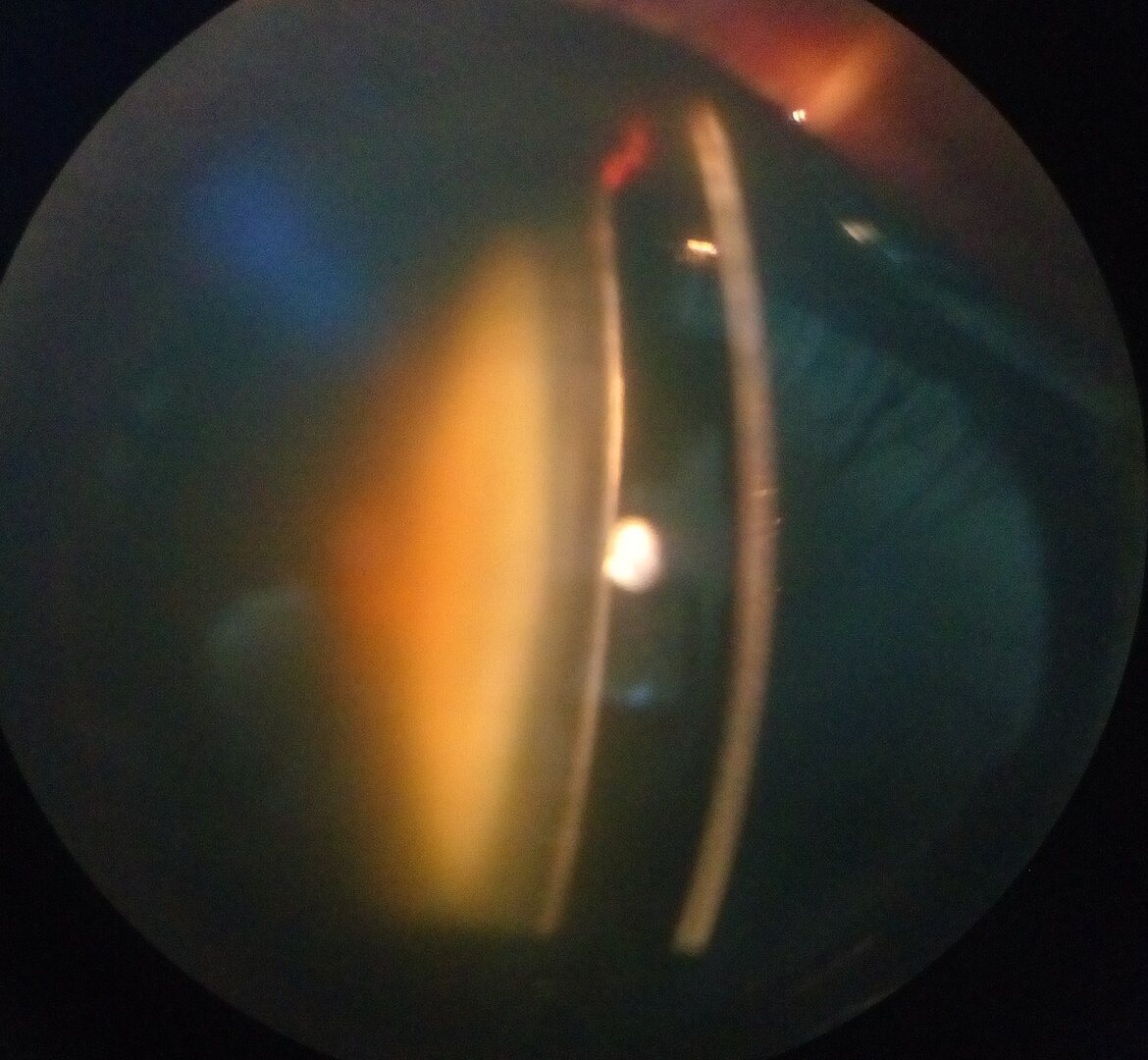
Nuclear cataract: slow blur and faded colors
This is the type most closely associated with age. The nucleus at the center of the lens gradually hardens and turns yellow. Some degree of yellowing and hardening is considered a normal part of aging after age 50, and it becomes a cataract when it starts to affect vision.
What you notice: blur that increases slowly, mainly for distance. Faded colors, especially blues. Difficulty in dim light. The glasses prescription shifts toward nearsightedness, which is why some people temporarily go back to reading without reading glasses (“second sight”). Pace: slow, usually years.
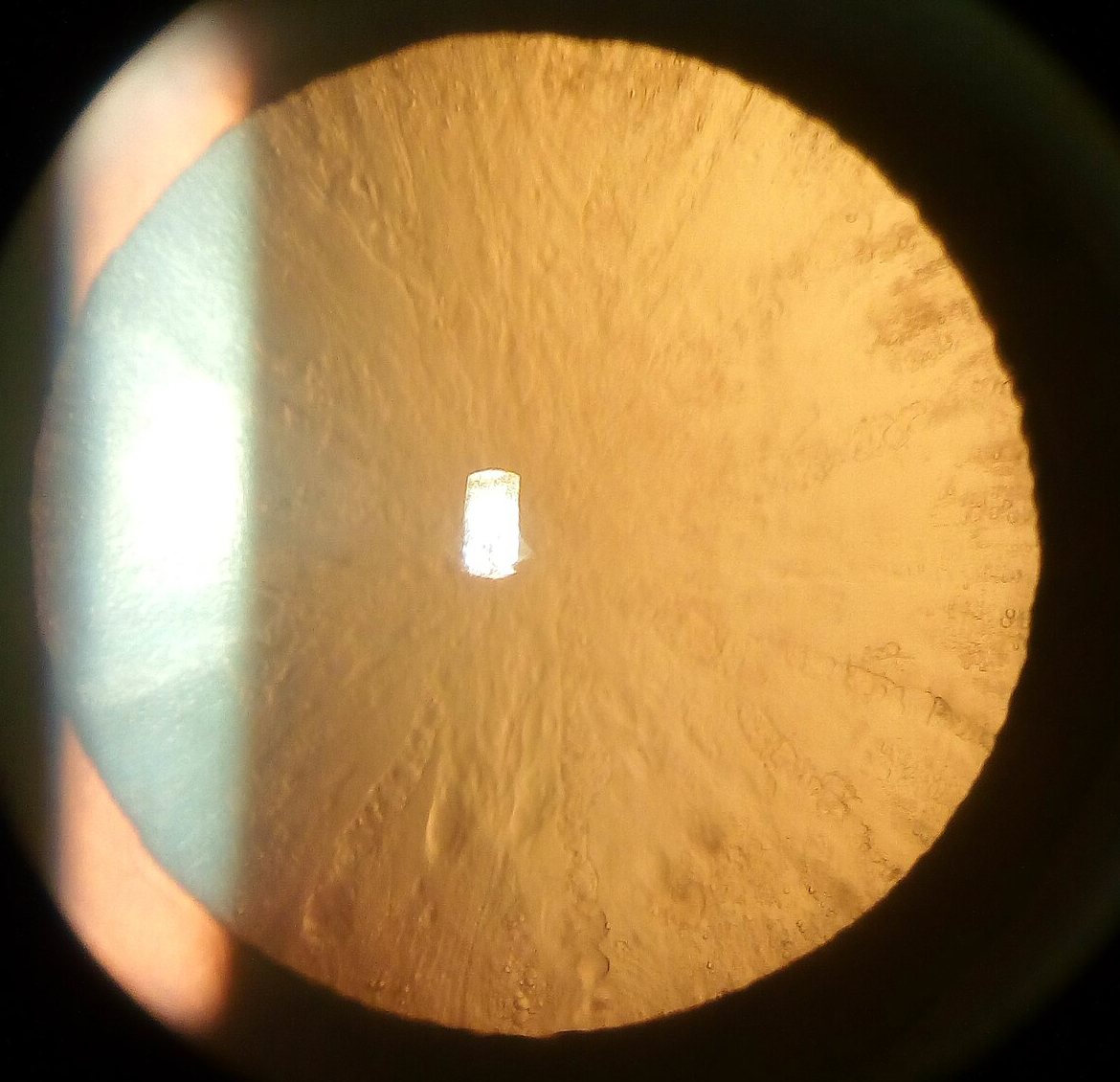
Cortical cataract: glare from headlights
Here the clouding starts in the outer layer of the lens, at the edge, in the form of white spokes that advance like wedges toward the center. As long as the spokes stay at the edge, vision can remain good. When they reach the center of the pupil, they scatter the light.
What you notice: glare from bright lights, especially from car headlights at night. Sometimes double vision in one eye. Pace: highly variable. Some spokes do not change for years, and some progress quickly. This type is linked more than the others to prolonged sun exposure.
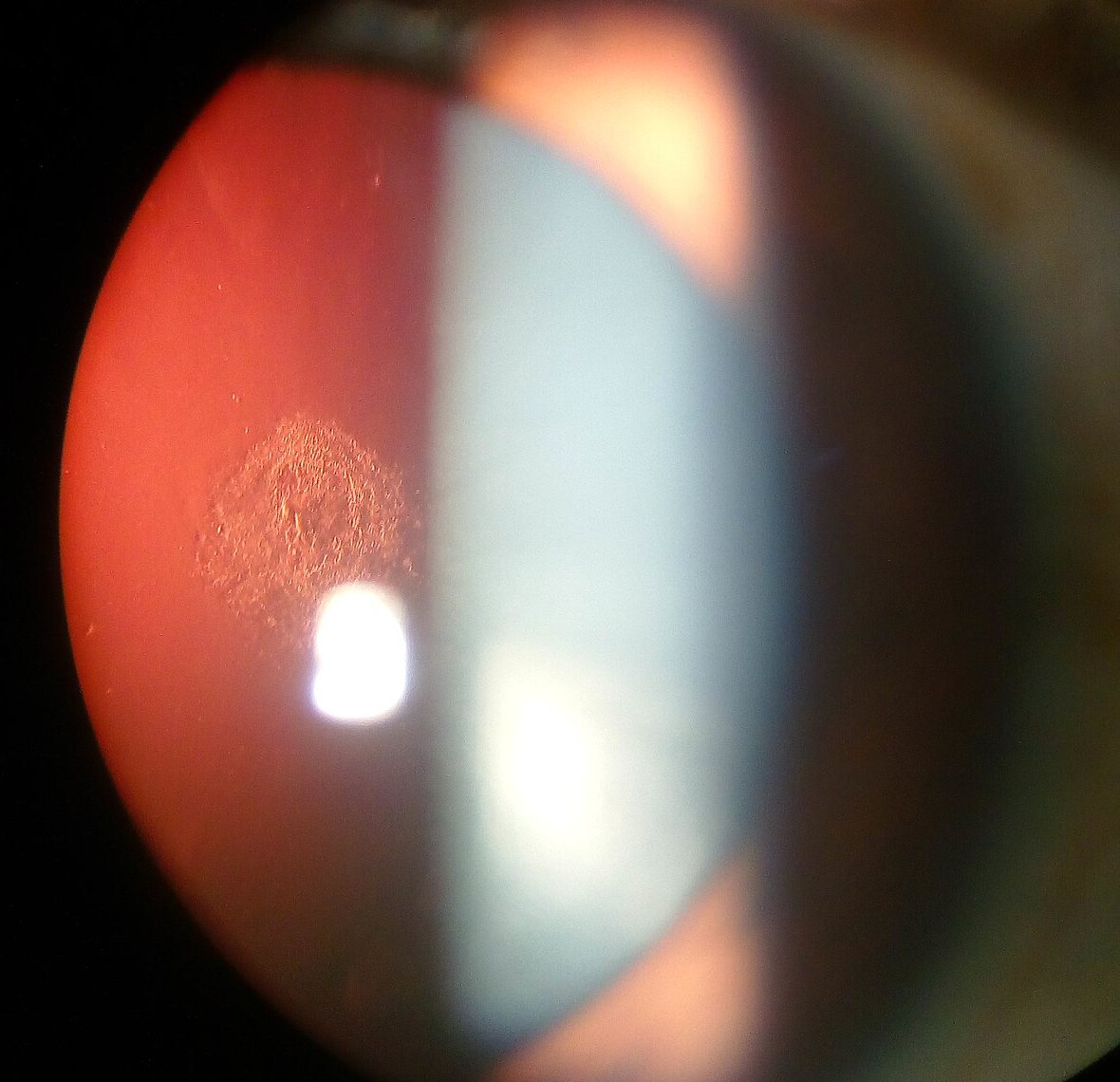
Posterior subcapsular cataract: glare in daylight and difficulty reading
A small granular clouding at the back of the lens, exactly in the center, right against the posterior capsule. Because of this location, even a small clouding is very bothersome: in bright light and when reading, the pupil constricts, and all the light passes through the cloudy area.
What you notice: strong glare in sunlight, and difficulty reading that is greater than the difficulty seeing in the distance. Pace: variable, and sometimes fast, within months. This type often appears at a younger age than the other two. It is the typical type after long-term steroid treatment, inflammation inside the eye, trauma or radiation therapy, and it is also more common in people with diabetes.
Mixed cataract and advanced stages
In reality the boundaries are not sharp. In many patients the doctor sees a combination, for example a yellow nucleus with a few spokes at the edge. When a cataract goes untreated for many years, the nucleus may become brown and very hard, or the whole lens may become white and opaque (a “ripe cataract”). Today, with surgery readily available, such stages are seldom seen. On the question of whether you need to wait for the cataract to “ripen” (you do not), see When Should You Have Cataract Surgery?
What causes cataract? The risk factors in adults
Cataract is the result of changes in the lens proteins that accumulate over a lifetime. These are the factors that research links to it:
| Factor | What is known |
|---|---|
| Age | The main factor, in all studies. The risk rises with every decade from about age 40. |
| Diabetes | Cataract appears at a younger age and progresses faster. Sharp changes in blood sugar level can also temporarily change the glasses prescription. See also cataract and diabetes. |
| Steroids | Long-term treatment with pills, inhalers, eye drops or injections into the eye is linked mainly to posterior subcapsular cataract. The risk depends on the dose and the duration of treatment. |
| Sun (UV radiation) | Cumulative exposure over years is linked mainly to cortical cataract. |
| Smoking and alcohol | Smoking raises the risk of nuclear cataract, and the more you smoke the greater the risk. Heavy alcohol drinking has also been linked to cataract. |
| Trauma to the eye | A blunt blow or a penetrating injury can cause cataract immediately, or years after the injury. Usually in one eye only. |
| Inflammation inside the eye (uveitis) | Both the prolonged inflammation and the steroids used to treat it speed up cataract. |
| Previous eye surgery | After vitrectomy (retinal surgery in which the vitreous is removed), nuclear cataract develops in most patients over age 50, usually within two years. Glaucoma surgery also raises the risk. |
| High myopia | Nuclear cataract appears earlier. See Cataract Surgery with High Myopia. |
| Radiation therapy | Ionizing radiation to the head area can cause cataract, sometimes many years after the treatment. |
| Other factors | Family tendency, high blood pressure and obesity. Cataract is slightly more common in women than in men. |
In most cases there is no single cause. Age acts together with several of the other factors, which is why one person comes to surgery at age 60 and another at age 85.
Cataract in one eye, or at a young age
Age-related cataract usually appears in both eyes, even if not to the same degree. A cataract in one eye only, or a cataract at a relatively young age, directs the doctor to look for a specific cause: an old injury, steroid treatment, diabetes, inflammation in the eye or previous surgery. That is why it is important to tell the doctor about regular medications, including inhalers, ointments and drops, and about eye injuries even if they happened long ago.
What can you influence?
Age and heredity cannot be changed. What you can do is stop smoking, keep diabetes under control, protect your eyes from the sun and from injuries, and use steroids only as needed and under a doctor's guidance. You must not stop a medication that was prescribed for you on your own: in most cases its benefit is far greater than the risk of cataract, which is a condition that can be operated on. Full details, including what is known about diet and supplements: Can Cataracts Be Prevented?
Does the type of cataract change the treatment?
The treatment for all types is the same surgery: removing the cloudy lens and implanting a clear artificial lens. The type mainly affects the timing. Posterior subcapsular cataract becomes bothersome relatively early, and patients with it come to surgery sooner. Nuclear cataract can progress for years before it becomes bothersome. The type and hardness of the lens also affect the planning of the surgery: a brown, very hard nucleus or a completely white lens makes the surgery more complex, and this is one of the reasons not to postpone surgery far beyond what is necessary.
Further reading: cataract symptoms, risks and complications of cataract surgery, and information on cataract surgery with Dr. Stern.
Frequently asked questions
Which type of cataract is the most common?
Nuclear cataract is the type most closely associated with age, and it is the most common in older adults who come to surgery. Many patients have a combination of several types. The frequency of each type varies between populations.
Which type of cataract progresses fastest?
Posterior subcapsular cataract may progress quickly, sometimes within months. It also becomes bothersome early, because it sits exactly at the center of the back of the lens. Nuclear cataract usually progresses slowly, over years, and cortical cataract progresses at a pace that varies from person to person.
Do steroids cause cataract?
Long-term treatment with steroids, whether as pills, inhalers, eye drops or injections into the eye, raises the risk of cataract, mainly of the posterior subcapsular type. The risk depends on the dose and the duration of treatment. Do not stop a medication on your own: talk to the doctor who prescribed it, and have your eyes checked by an ophthalmologist from time to time.
Is cataract hereditary?
Age-related cataract has a familial component, but it is only one of several factors, alongside age, diabetes, smoking and sun exposure. If your parents had cataract, it does not mean it will appear in you at the same age, and in any case this is a very common condition at an older age.
Is cataract after retinal surgery to be expected?
Yes. After vitrectomy, retinal surgery in which the vitreous is removed, nuclear cataract develops in most patients over age 50, usually within two years. This is a well-known consequence of the surgery and not a mishap, and retinal surgeons explain it in advance. The cataract is operated on when it interferes with vision.
References
- Tsai LM, Afshari NA, Brasington CR, et al. 2022-2023 Basic and Clinical Science Course, Section 11: Lens and Cataract. San Francisco: American Academy of Ophthalmology; 2022.
- Olson RJ, Braga-Mele R, Chen SH, et al. Cataract in the Adult Eye Preferred Practice Pattern. Ophthalmology. 2017;124(2):P1-P119. Link