Pterygium Surgery in Jerusalem: Dr. Benjamin Stern
A pterygium is a benign growth of conjunctival tissue onto the cornea — very common in Israel because of the sun. When it causes persistent irritation or astigmatism, or approaches the visual axis, the solution is surgical removal with a technique that lowers the risk of recurrence. Dr. Stern, senior ophthalmologist and surgeon at Hadassah Ein Kerem, operates on pterygium in Jerusalem and Beit Shemesh. Care in English.
- Senior physician, Hadassah Ein Kerem
- Surgery in Ein Kerem and Beit Shemesh
- Conjunctival flap + mitomycin C
- 56 reviews · 4.96/5 on MedReviews
Why have your pterygium removed by Dr. Stern
An experienced anterior segment surgeon
Senior physician and cataract & refractive surgeon at Hadassah Ein Kerem, fellowship-trained in Paris. Pterygium is surgery of the ocular surface and cornea — exactly Dr. Stern's field.
A technique designed to prevent recurrence
Removal of the pterygium and coverage of the area with a conjunctival flap of adjacent healthy tissue, combined with mitomycin C, an agent that limits scar formation and reduces the risk of recurrence.
Diagnosis before surgery
Not every pterygium needs surgery. Slit-lamp examination, grading of its extent and effect on the cornea, and exclusion of other findings — and only then a shared decision.
Close to home
Surgery is performed at Hadassah Ein Kerem Medical Center or the Hadassah Beit Shemesh center, under local anaesthesia, and you go home the same day. Care in English, Hebrew and French.
How pterygium surgery is performed
The operation is performed under local anaesthesia as an outpatient procedure. You are awake, the eye is completely numb, and there is no pain during surgery.
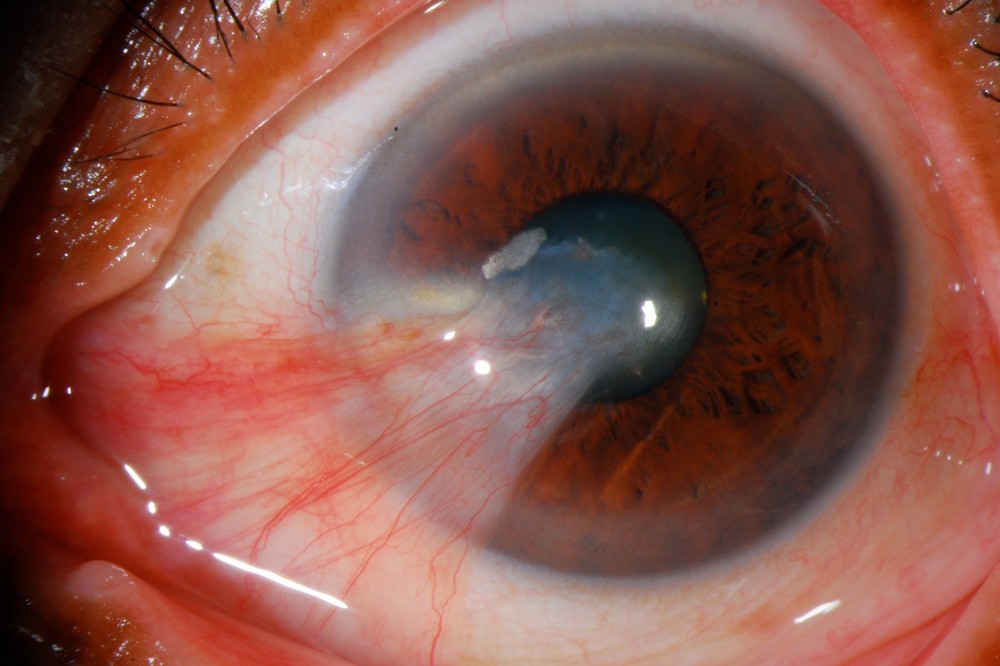
- Local anaesthesiaDrops and a small local injection; the eye is completely numb throughout the operation.
- Removing the pterygiumGentle separation of the head of the pterygium from the cornea and removal of the fibrovascular tissue, with smoothing of the corneal surface.
- Mitomycin CA brief, controlled application of mitomycin C to the surgical area, to inhibit scar tissue and reduce the risk of recurrence.
- Conjunctival flapAdjacent healthy conjunctiva is slid over to cover the exposed area and secured with fine sutures — with no need to harvest a graft from elsewhere on the eye.
- Finishing and protectionAntibiotic and steroid drops, sometimes a bandage contact lens for the first days. You go home the same day.
Why what happens after removal matters
Simple excision alone (bare sclera) carries very high recurrence rates. Covering the area with healthy conjunctiva and using mitomycin C lower the risk substantially, and together with gradual tapering of steroid drops after surgery and UV protection, the result is stable in the great majority of cases. Technique comparison and recurrence rates in the pterygium guide →
When does a pterygium need surgery
A small, quiet pterygium can be monitored and protected from the sun. Surgery is recommended in one or more of the following situations:
Threat to the visual axis
The pterygium is advancing toward the centre of the pupil. It is better to operate before it reaches the central cornea.
Astigmatism and reduced vision
The pterygium pulls on and distorts the cornea, causing astigmatism or blur that glasses do not fully correct.
Chronic irritation
Redness, burning and a foreign-body sensation that do not respond to lubricating drops and anti-inflammatory treatment.
Cosmetic concern or restricted movement
An appearance that troubles the patient, or a large pterygium that limits eye movement.
Pterygium and cataract together? The pterygium is removed first, the cornea is allowed about three months to stabilise, and only then are the measurements for cataract surgery taken — so the intraocular lens is calculated accurately. Cataract surgery with Dr. Stern →
Your pathway: from diagnosis to recovery
- Examination and diagnosisSlit-lamp examination, grading of the extent and effect on the cornea, and corneal mapping if needed. Pinguecula or other findings are ruled out, and a decision is made whether to operate or monitor.
- PreparationAn explanation of the surgery and recovery, instructions about drops and stopping eye makeup, and scheduling at Hadassah Ein Kerem or Beit Shemesh.
- The surgeryLocal anaesthesia, day surgery. In the first days expect redness, a scratchy sensation and tearing — temporary effects.
- Recovery and follow-upVision stabilises over weeks; steroid drops are tapered over 4–12 weeks to prevent rebound inflammation; light work within days; permanent sun protection. Recovery step by step in the guide →
Who performs the surgery
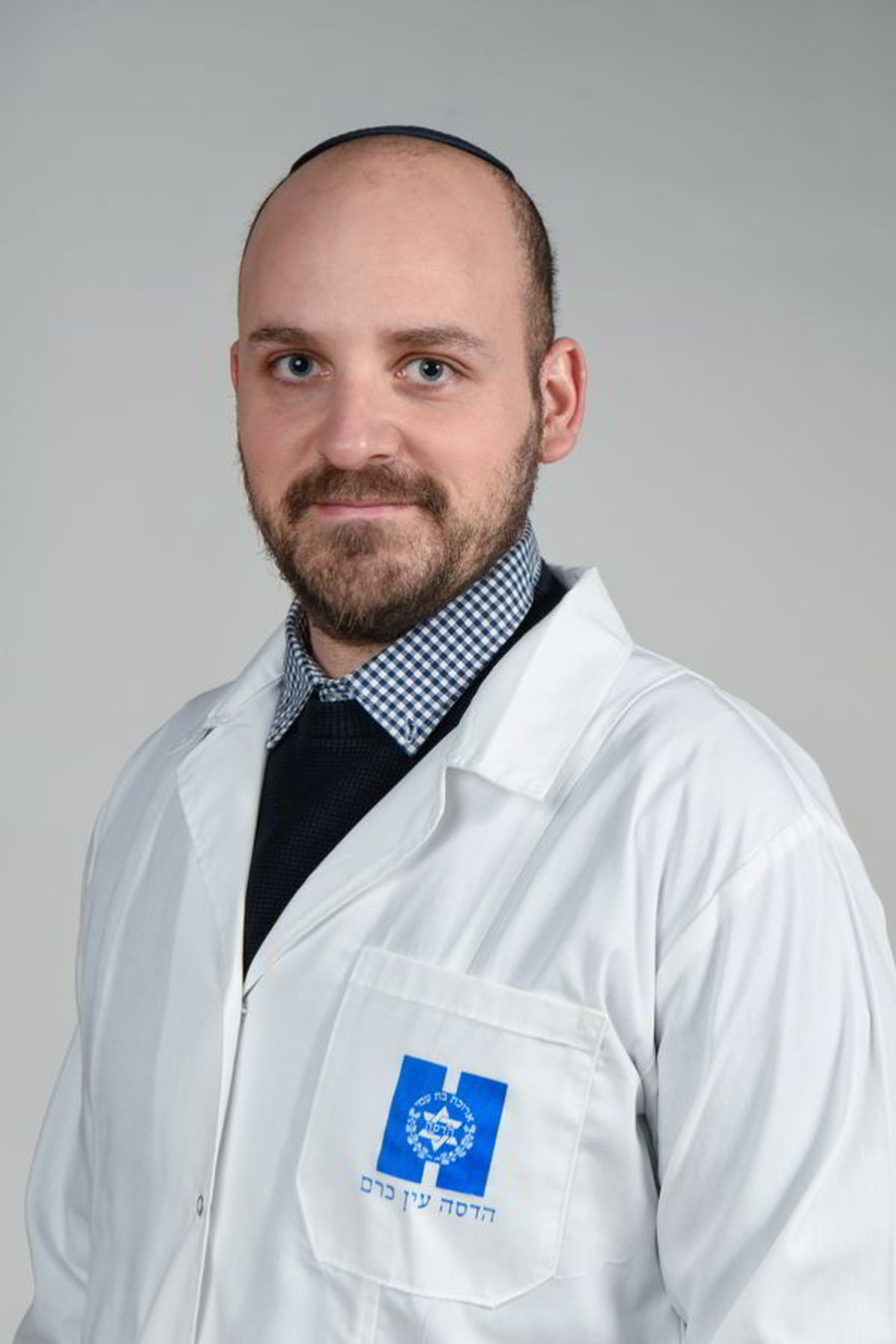
Dr. Benjamin Stern is a senior physician and cataract & refractive surgeon in the Department of Ophthalmology at Hadassah Ein Kerem Medical Center and a lecturer at the Hebrew University Faculty of Medicine. He founded and heads the Biomedical Optics Research Laboratory at Hadassah and is co-founder of AIOLsci, winner of the 2026 RefracTech Innovator Award of the International Society of Refractive Surgery (ISRS).
- MD, Hebrew University of Jerusalem
- Residency in ophthalmology, Hadassah Ein Kerem (2017–2022)
- Cataract & refractive fellowship, Rothschild Foundation Hospital, Paris (2023–2024)
- Senior physician, cataract & refractive surgeon, Hadassah Ein Kerem (2025–present)
- The Ophthalmologist Power List 2025 — "Rising Star" in cataract surgery
What patients say
56 verified patient reviews on MedReviews, with an average rating of 4.96 out of 5.
Read all the reviews →Frequently asked questions about pterygium surgery in Jerusalem
How do I book pterygium surgery with Dr. Stern?
Consultations are booked through the Hadassah Sharap clinic at 02-677-8899, in Ein Kerem or Beit Shemesh. Surgery is performed at Hadassah Ein Kerem Medical Center or the Hadassah Beit Shemesh center.
Which technique does Dr. Stern use?
Removal of the pterygium, a brief application of mitomycin C, and coverage of the area with a conjunctival flap of adjacent healthy tissue secured with fine sutures. Combining conjunctival coverage with mitomycin C substantially reduces the risk of recurrence compared with simple excision.
Does the surgery hurt?
The operation itself does not hurt — the eye is completely numb. In the days afterwards there may be a scratchy sensation, redness and tearing, relieved with drops and a bandage contact lens.
Can the pterygium come back?
There is a risk of recurrence, which depends mainly on the technique. Covering the area with conjunctival tissue and using mitomycin C bring it down to a low percentage. Following the steroid tapering schedule and wearing sunglasses reduce the risk further.
When can I return to work and sport?
Light work within a few days. Avoid strenuous activity, dust and swimming for at least two weeks, and eye makeup for 2–3 weeks.
Can drops get rid of a pterygium?
No. Drops relieve irritation but do not dissolve the tissue; the only way to remove a pterygium is surgery. A small, quiet pterygium does not always need surgery — monitoring and sun protection are enough.
Is a pterygium dangerous?
No — it is a benign, non-cancerous growth. Still, any growth on the eye should be examined by an ophthalmologist, to rule out other findings and monitor its progression.
In which languages is care provided?
Care is provided in English, Hebrew and French.
Is the operation covered by insurance?
In most cases, yes — through your health fund’s supplementary insurance or private health insurance, according to your policy. Dr. Stern’s clinic helps you obtain the funding approval. All about insurance & funding →
Noticed a growth on your eye or persistent irritation?
Book a diagnosis and consultation through the Sharap clinic of Hadassah Medical Center (Ein Kerem or Beit Shemesh).
+972 2-677-8899