

In brief
- The decision to have cataract surgery is based on function: when your vision is no longer enough for what you need and want to do, and new glasses do not solve the problem.
- There is no need to wait for the cataract to “ripen.” That is a notion from another era. A very advanced cataract actually makes the surgery more complicated.
- A cataract that does not bother you does not have to be operated on. In most cases, waiting does not cause irreversible damage to the eye.
- Waiting has a price: a gradual decline in vision, more difficulty driving, a higher risk of falls, and a lens that keeps getting harder.
- There are situations in which the doctor will recommend not delaying, even if your vision is still reasonable.
When does a cataract need surgery? By function, not by a number
There is no “number” on the eye chart below which you operate and above which you wait. The professional guidelines state that the main reason for surgery is vision that no longer meets the patient's needs, when there is a reasonable chance that surgery will improve it. That is why two people with exactly the same cataract can reach different decisions: a taxi driver or an accountant will feel the interference sooner than someone whose vision is enough for their daily routine.
Questions worth asking yourself:
- Do I find it hard to read, work at a computer or watch television, even with up-to-date glasses?
- Do I avoid driving at night because of glare from headlights?
- Am I giving up hobbies, work or going out because of my vision?
- Am I less sure of myself on stairs, or have I already stumbled or fallen?
If the answer to any of these questions is “yes,” and the exam shows that the cataract is the cause, it is time to talk about surgery. The visual acuity measured in the clinic is only part of the picture: it is tested in a dark room with black letters on a white background, and does not always reflect the difficulty you have with glare or in dim light. Studies have found that even patients with good visual acuity on testing, who had symptoms, reported better function after surgery.
Do you need to wait for the cataract to “ripen”?
No. The term “ripe cataract” is left over from the era when cataract surgery was done through a large incision, with more risks and a long recovery, and so it was put off as long as possible. In modern surgery the lens is broken up and suctioned out through a tiny incision, and this can be done at any stage.
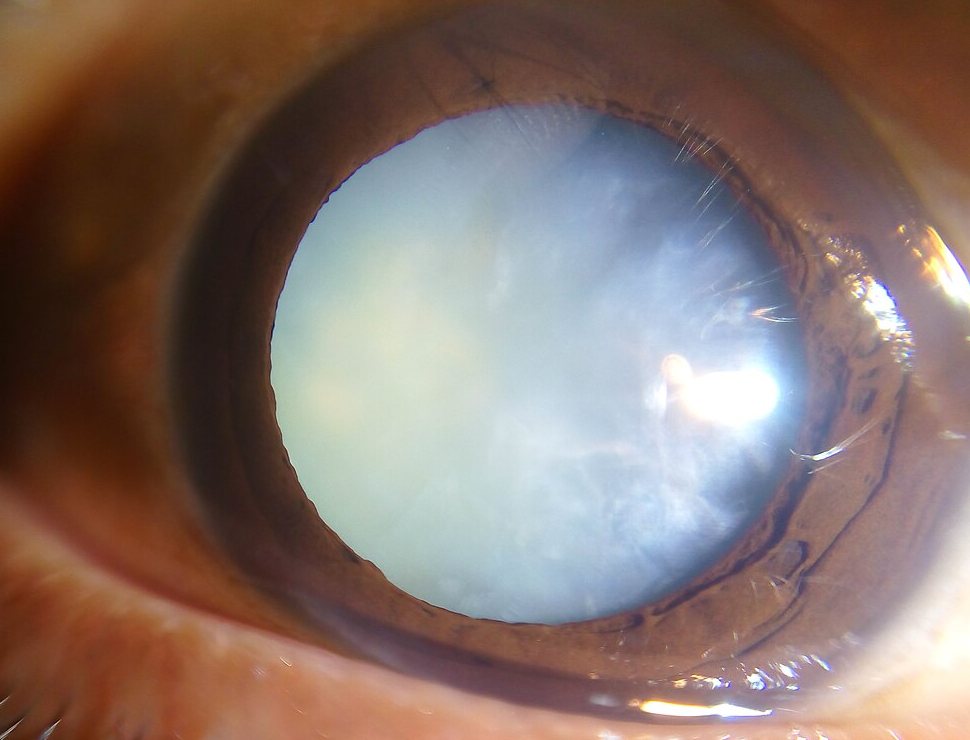
In fact, the opposite is true: a lens that has become brown and very hard, or completely white, is harder to break up. In the large national databases, a brown or white cataract is one of the risk factors for a complication during surgery. That too is rare, but there is no reason to get to that point.
What happens if you put off surgery?
What waiting usually does not put at risk
An ordinary cataract does not “ruin” the eye. It does not damage the retina or the optic nerve, and in most cases good vision can be achieved even when surgery is done later. So there is no need to panic: anyone whose cataract is not bothersome can continue with follow-up, without worrying that they are losing something.
What waiting does cost
- Vision that keeps declining. A cataract progresses over time and does not go back.
- Falls. Poor vision is a risk factor for falls and fractures in older adults. In a controlled trial from the United Kingdom, among women over age 70, cataract surgery on the first eye reduced the rate of falls by about one third in the following year. Not all studies reached the same result, and in a study from Australia the clear reduction in falls was seen only after surgery on the second eye.
- Driving. In a U.S. study, drivers with significant cataract were involved in at-fault crashes 2.5 times more often than drivers without cataract. Among those who had surgery, the crash rate was about half that of those who did not.
- Quality of life. Reviews of studies have found that waiting more than six months for surgery that has already been decided on is associated with a further decline in vision, lower quality of life, depression and falls.
- More complex surgery. The harder the lens, the more energy is needed to break it up, and the risk of a complication rises slightly.
- Monitoring the retina. Through a very cloudy lens, it is hard for the doctor to examine the retina and to image it.
In which situations is it recommended not to delay?
Sometimes the doctor will recommend surgery even when the patient is still managing:
- A narrow angle or a risk of angle-closure glaucoma. A lens that is thickening pushes the iris forward, and removing it opens the angle.
- Retinal disease that requires monitoring or treatment, such as diabetic retinopathy or macular degeneration, when the cataract hides the retina.
- A very advanced cataract, which can cause inflammation or a rise in eye pressure. This is rare, and it requires prompt surgery.
- A large difference in prescription between the two eyes, for example after surgery on the first eye, which causes imbalance and difficulty with depth perception.
- Vision requirements for work or for a driver's license, when your vision no longer meets them.
When can you wait, and when will surgery not help?
There is no reason to operate when up-to-date glasses give you vision that is enough for you. Surgery is also not done when no improvement is expected, for example when the main cause of the decreased vision is another disease of the eye, or when a health condition does not allow safe surgery. When there is both a cataract and a retinal disease, the decision is more complex: sometimes surgery helps less than expected, and sometimes it helps a great deal. On this, see cataract and macular degeneration.
And what about the second eye?
The considerations are the same as for the first eye. Studies show that people who have surgery on both eyes gain more than those who have surgery on one eye only: better depth perception, better contrast sensitivity and better day-to-day function. In one study, the proportion of patients who met the vision requirements for driving rose from 52% after the first eye to 86% after the second.
The second eye is usually operated on a few weeks after the first, once it is clear that the first eye has healed and what prescription it ended up with. In the meantime the difference between the eyes can be bothersome, so it is not worth dragging this period out for no reason. There is also the option of operating on both eyes on the same day: see Cataract Surgery on Both Eyes on the Same Day.
How is the decision made in practice?
The decision is shared between you and the doctor. You bring what only you know: what is difficult for you and what matters to you. The doctor brings the findings of the exam: how far the cataract explains your complaints, the condition of the other parts of the eye, your personal risk and what is expected to improve. Cataract surgery is elective surgery, and a convenient date can be chosen for it. Deciding to wait does not close any door: a periodic exam is enough, and an earlier one if your vision changes.
Further reading: cataract symptoms, risks and complications of cataract surgery, preparing for cataract surgery, and cataract surgery with Dr. Stern in Jerusalem. A full explanation of the surgery itself is in the complete guide to cataract.
Frequently asked questions
I was told I have the beginnings of a cataract. Do I need surgery?
Not necessarily. A mild cataract that does not interfere with daily life does not require surgery. Periodic follow-up with an ophthalmologist is enough, with up-to-date glasses as needed. Surgery comes up for discussion again when your vision starts to limit you, or if the doctor finds a medical reason not to delay.
Does delaying cataract surgery harm the eye?
In most cases no irreversible damage is caused, and good vision can be achieved with later surgery too. Still, prolonged waiting has a price: vision keeps declining, the risk of falls and of difficulty driving rises, and the lens hardens, so the surgery becomes more complex. In certain situations, such as a narrow angle or a very advanced cataract, the doctor will recommend not waiting.
My vision on testing is still good. Is it too early for surgery?
There is no number that decides. The visual acuity measured in the clinic does not always reflect the difficulty you have with glare or in dim light. If the symptoms bother you, and the exam shows that the cataract is the cause, surgery can be considered. And if your vision does not trouble you, you can wait even when the cataract is clearly visible at the exam.
Is there an age at which it is too late for cataract surgery?
There is no upper age limit. In the United Kingdom's national database, more than 25,000 operations in people aged 90 and over were examined. Among those who had no other eye disease, about 85% reached a visual acuity of 20/40 or better. The rate of complications during surgery was slightly higher than average, and the researchers concluded that advanced age in itself is not a reason to avoid surgery.
How long do you wait between surgery on the first eye and on the second?
Usually a few weeks, to make sure the first eye has healed and to see what prescription it ended up with. The timing is set according to the condition of your eyes and your needs. If the difference between the eyes is bothersome, the second surgery can be moved up. Some centers operate on both eyes on the same day, in suitable patients.
Can a cataract become an emergency?
Rarely. A very advanced cataract that has gone untreated for years can cause inflammation or a sharp rise in eye pressure, with pain, redness and decreased vision. This is a condition that requires urgent care. An ordinary cataract is not an emergency, and the surgery is scheduled in advance for a convenient date.
References
- Olson RJ, Braga-Mele R, Chen SH, et al. Cataract in the Adult Eye Preferred Practice Pattern. Ophthalmology. 2017;124(2):P1-P119. Link
- Tsai LM, Afshari NA, Brasington CR, et al. 2022-2023 Basic and Clinical Science Course, Section 11: Lens and Cataract. San Francisco: American Academy of Ophthalmology; 2022.
- Keay L, Ho KC, Rogers K, et al. The incidence of falls after first and second eye cataract surgery: a longitudinal cohort study. Med J Aust. 2022;217(2):94-99. Link
- Gimbel HV, Dardzhikova AA. Consequences of waiting for cataract surgery. Curr Opin Ophthalmol. 2011;22(1):28-30. Link
- Narendran N, Jaycock P, Johnston RL, et al. The Cataract National Dataset electronic multicentre audit of 55,567 operations: risk stratification for posterior capsule rupture and vitreous loss. Eye (Lond). 2009;23(1):31-37. Link
- Theodoropoulou S, Grzeda MT, Donachie PHJ, Johnston RL, Sparrow JM, Tole DM. The Royal College of Ophthalmologists' National Ophthalmology Database Study of cataract surgery. Report 5: clinical outcome and risk factors for posterior capsule rupture and visual acuity loss following cataract surgery in patients aged 90 years and older. Eye (Lond). 2019;33(7):1161-1170. Link