
ICL Lenses in Jerusalem: Dr. Benjamin Stern
Been told you are "not a LASIK candidate"? For high myopia, a thin cornea or significant dry eye there is an excellent alternative: an ICL (Implantable Collamer Lens) placed inside the eye, with no reshaping of the cornea and with your natural lens preserved. Dr. Stern performs the surgery at Hadassah Ein Kerem Medical Center. Care in English.
- Surgery at Hadassah Ein Kerem
- Refractive fellowship, Paris
- ISRS RefracTech Innovator Award 2026
- 56 reviews · 4.96/5 on MedReviews
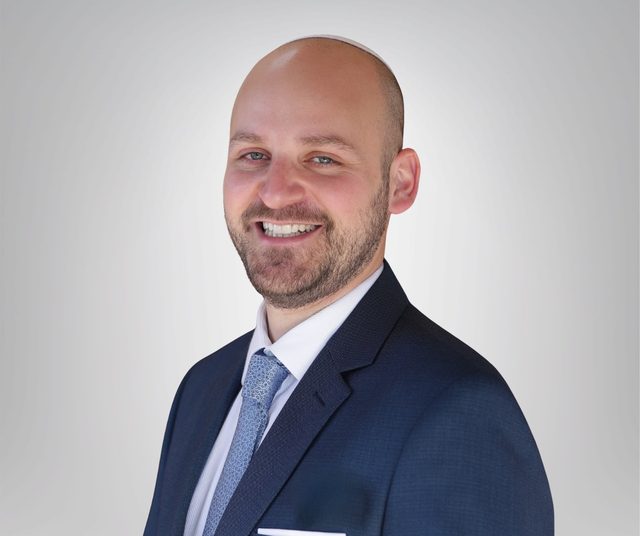
Why choose Dr. Stern for ICL implantation
A refractive and intraocular surgeon in one
ICL is intraocular surgery that calls for both refractive judgement and experience operating inside the eye. Dr. Stern is a cataract and refractive surgeon, fellowship-trained in Paris under Prof. Damien Gatinel.
An intraocular lens specialist
Founder and head of the Biomedical Optics Research Laboratory at Hadassah, which studies and measures intraocular lenses, and co-founder of AIOLsci. That optical understanding serves ICL planning too.
Rigorous pre-operative testing
Endothelial cell count, anterior chamber depth, sulcus sizing and prescription stability, to choose the right lens size and make sure the surgery is safe for your eye.
Surgery in a university hospital
Implantation takes place in the operating rooms of Hadassah Ein Kerem, with structured long-term follow-up: intraocular pressure, endothelial cells and lens vault.
How ICL implantation is performed
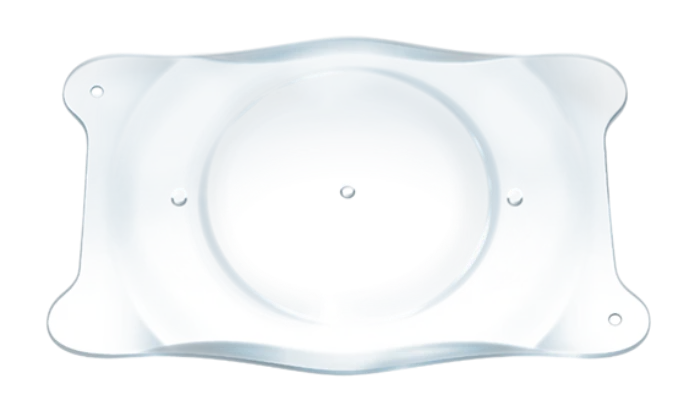
The EVO Visian ICL is a soft lens made of Collamer, implanted behind the iris and in front of the natural lens. The natural lens stays in place and keeps its focusing ability, which is why the procedure is called "phakic".
- Local anaesthesia and pupil dilationA day procedure, usually under anaesthetic drops only, taking about fifteen minutes per eye.
- A tiny incisionAbout 3 mm in the clear cornea, sometimes with small side ports for the instruments.
- Injecting the lensThe folded lens is injected into the eye with a viscoelastic and gently unfolds above the natural lens.
- Positioning in the sulcusThe four footplates are tucked behind the iris, in the ciliary sulcus, and the lens is centred over the pupil.
- Clean-up and finishThorough removal of the viscoelastic — important to prevent a pressure rise — and constriction of the pupil. With the EVO model no iridotomy is needed.
What happens after surgery
Visual recovery is very fast, and most people return to daily activities within a day or two. Many patients choose to have both eyes done on the same day. Periodic follow-up is then needed — even when vision is excellent — to check intraocular pressure, endothelial cells and lens vault. Possible risks and long-term follow-up in the ICL guide →
Who the ICL is for
The ICL is mainly for people for whom laser is not the right solution. The main conditions:
Moderate to high myopia
The EVO Visian ICL is FDA-approved for full correction of myopia from −3.00 to −15.00 D, and in its toric version for 1.00–4.00 D of astigmatism as well.
Not a laser candidate
A cornea that is too thin, borderline topography or significant dry eye — situations where it is better not to remove corneal tissue.
An eye with room for the lens
Anterior chamber depth of at least 3.0 mm and a normal endothelial cell count, checked at the candidacy visit.
Age and a stable prescription
Usually from age 21 (the FDA-approved age), with a stable prescription and no active eye disease, cataract or glaucoma.
Advantages over laser: no corneal tissue is removed, it is reversible (the lens can be removed if needed), and in high myopes visual quality and contrast sensitivity tend to be better than after LASIK. Full comparison with LASIK and PRK in the guide →
Your pathway: from testing to your new vision
- Consultation and candidacy testingVision and prescription testing, corneal mapping, specular microscopy (endothelial cells), anterior chamber depth and sulcus measurement (white-to-white, sometimes UBM or OCT).
- Choosing the lensLens power and length calculated from the measurements; a toric lens if there is significant astigmatism.
- Surgery at Hadassah Ein KeremAbout fifteen minutes per eye, under local anaesthesia. Both eyes on the same day or separately, as you prefer.
- Follow-upA check in the first days, then periodic long-term follow-up, even without complaints.
Who performs the surgery
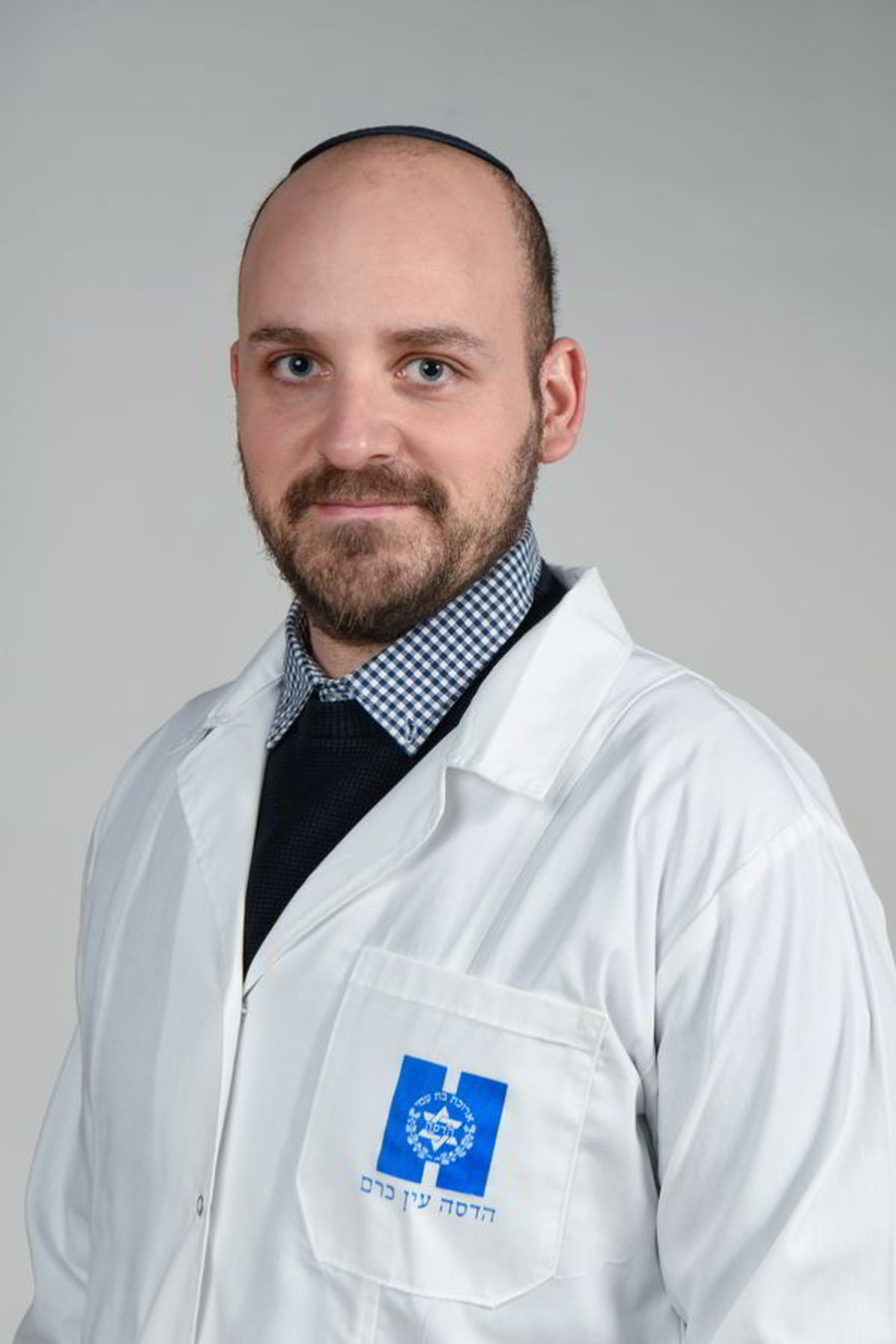
Dr. Benjamin Stern is a senior physician and cataract & refractive surgeon in the Department of Ophthalmology at Hadassah Ein Kerem Medical Center and a lecturer at the Hebrew University Faculty of Medicine. He founded and heads the Biomedical Optics Research Laboratory at Hadassah and is co-founder of AIOLsci, winner of the 2026 RefracTech Innovator Award of the International Society of Refractive Surgery (ISRS).
- MD, Hebrew University of Jerusalem
- Residency in ophthalmology, Hadassah Ein Kerem (2017–2022)
- Cataract & refractive fellowship, Rothschild Foundation Hospital, Paris (2023–2024)
- Senior physician, cataract & refractive surgeon, Hadassah Ein Kerem (2025–present)
- The Ophthalmologist Power List 2025 — "Rising Star" in cataract surgery
What patients say
56 verified patient reviews on MedReviews, with an average rating of 4.96 out of 5.
Read all the reviews →Frequently asked questions about ICL lenses in Jerusalem
How do I book an ICL consultation?
A consultation with Dr. Stern is booked through the Hadassah Sharap clinic at 02-677-8899. Surgery is performed at Hadassah Ein Kerem Medical Center in Jerusalem.
What is the difference between ICL and LASIK?
LASIK reshapes the cornea and suits a more limited range of correction; the ICL is a lens implanted inside the eye, with no tissue removed, and can correct higher myopia — including in people whose cornea is too thin or who suffer from dry eye.
Does the surgery hurt?
No. It is performed under anaesthetic drops, takes about fifteen minutes per eye, and most patients experience minimal discomfort and very fast visual recovery.
Is the ICL reversible?
Yes, technically the lens can be removed — unlike laser surgery, which changes the cornea permanently. In practice removal is done only when there is a medical reason.
Does the ICL prevent cataract later in life?
No. The natural lens remains and ages normally; if cataract surgery is needed in the future, the ICL and the natural lens are removed together and a permanent intraocular lens is implanted.
What are the risks?
As with any intraocular surgery: a temporary rise in eye pressure, cataract (rare with modern models), gradual endothelial cell loss, and rare retinal detachment related mainly to the high myopia itself. That is why long-term follow-up is part of the treatment.
Will I need reading glasses after ICL?
The ICL does not affect the ageing of the natural lens, so presbyopia develops at its usual time around age 40–45, as in everyone.
In which languages is care provided?
Care is provided in English, Hebrew and French.
Been told you are not a laser candidate?
Come and find out whether an ICL is right for you. Consultations through Hadassah Sharap; surgery at Hadassah Ein Kerem, Jerusalem.
+972 2-677-8899