

In brief
- A cataract is a clouding of the eye's natural lens. It develops slowly, usually over years, and it is not painful.
- The typical symptoms: blurred or hazy vision, glare and halos around lights, faded colors, difficulty in dim light and frequent changes in your glasses prescription.
- Because the change is slow, many people get used to it and do not notice how much their vision has declined.
- A sudden drop in vision, pain, redness, flashes of light or a “curtain” in the visual field are not symptoms of cataract, and they call for an urgent exam.
- The diagnosis is simple: an exam by an ophthalmologist at the slit lamp, after pupil dilation.
What does a cataract feel like? The common symptoms
The natural lens sits behind the pupil and focuses light on the retina. When it becomes cloudy, some of the light is scattered instead of being focused. The result is vision that is less sharp and less “clean.” This is how it shows up in everyday life:

Blurred or hazy vision
This is the most common symptom. Patients describe looking through a dirty window or through fog. The blur increases gradually, and at some point even new glasses no longer correct it fully.
Glare and halos around lights
The cloudy lens scatters light, so bright light dazzles more than it used to. This is noticeable facing a low sun, and especially when driving at night facing the headlights of other cars. Halos or “rays” are sometimes seen around streetlights and car headlights.
Faded, yellowish colors
Over the years the lens turns yellow, and sometimes even brown. It filters out some of the light, mainly the blue shades, and colors look duller. When the process happens in both eyes in parallel, most people do not notice it. Many discover it only after surgery on the first eye, when white suddenly looks truly white.
Difficulty in dim light and low contrast
It becomes harder to read in dim lighting, to make out a step in a dark stairwell or to distinguish details in gray on gray. This decline in “contrast sensitivity” can appear even when the result on the eye chart at the doctor's office is still good. That is why a cataract can be very bothersome even when the numbers at the exam still look good.
Frequent changes in your glasses prescription and “second sight”
As the nucleus of the lens hardens, its refractive power increases and the eye becomes more nearsighted. If you are changing glasses more often than usual, cataract should be suspected. Some people actually experience this as an improvement: suddenly they can read without reading glasses. The phenomenon is known as “second sight.” It is temporary, and it disappears as the clouding progresses.
Double vision in one eye
Sometimes you see a shadow or a “ghost” next to letters, or several moons instead of one. If the doubling remains even when you cover the other eye, the source is in the eye itself, and often in the lens. Double vision that disappears when you cover one eye is a different matter altogether, and is not related to cataract.
Why don't people always notice?
Cataract progresses slowly, and the brain gets used to it. People whose cataract is similar in both eyes find it especially hard to notice the decline, because they have no “good” eye to compare with. Sometimes family members are the first to notice: the lights at home are turned up, night driving is avoided, faces are hard to recognize from a distance.
A simple self-check: cover one eye, then the other, and compare the sharpness and the colors. A clear difference between the eyes is a reason to schedule an exam.
Do the symptoms depend on the type of cataract?
Yes. The location of the clouding within the lens determines what you notice. Many people have several types together.
| Type of cataract | What you mainly notice | Rate of progression |
|---|---|---|
| Nuclear (in the center of the lens) | Blurred distance vision, faded colors, increasing nearsightedness and sometimes “second sight” | Slow |
| Cortical (in the outer layer of the lens) | Glare from headlights and bright lights | Variable |
| Posterior subcapsular (at the back of the lens) | Strong glare in daylight, difficulty reading | Variable, sometimes fast (months) |
More on the types and on the causes of each: types of cataract and risk factors.
What does not fit cataract? When to seek urgent care
Cataract is a slow, painless process. The following symptoms are not typical of it, and point to a different problem that needs a prompt exam:
These signs can indicate, for example, an attack of angle-closure glaucoma, a retinal tear or detachment, or a disease at the center of the retina (the macula). It is important to remember that cataract and other eye diseases can occur together. So even if you know you have a cataract, you should not attribute every new change in your vision to it.
How is cataract diagnosed?
The diagnosis is made at an ordinary eye exam, with no pain and no complicated tests:
- A conversation about your symptoms and about what is hard to do day to day: reading, driving, work, hobbies.
- A visual acuity and glasses test, to see how much of the decline can be corrected with a new prescription.
- A slit-lamp exam (the ophthalmologist's microscope), after drops to dilate the pupil. This lets the doctor see the lens directly, along with the type of clouding and how dense it is.
- An exam of the back of the eye: the retina, the macula and the optic nerve. This exam is important to make sure that the cataract is indeed the cause of the decline in vision, and not another disease.
- An eye pressure measurement, and further tests as needed, such as an OCT scan of the macula.
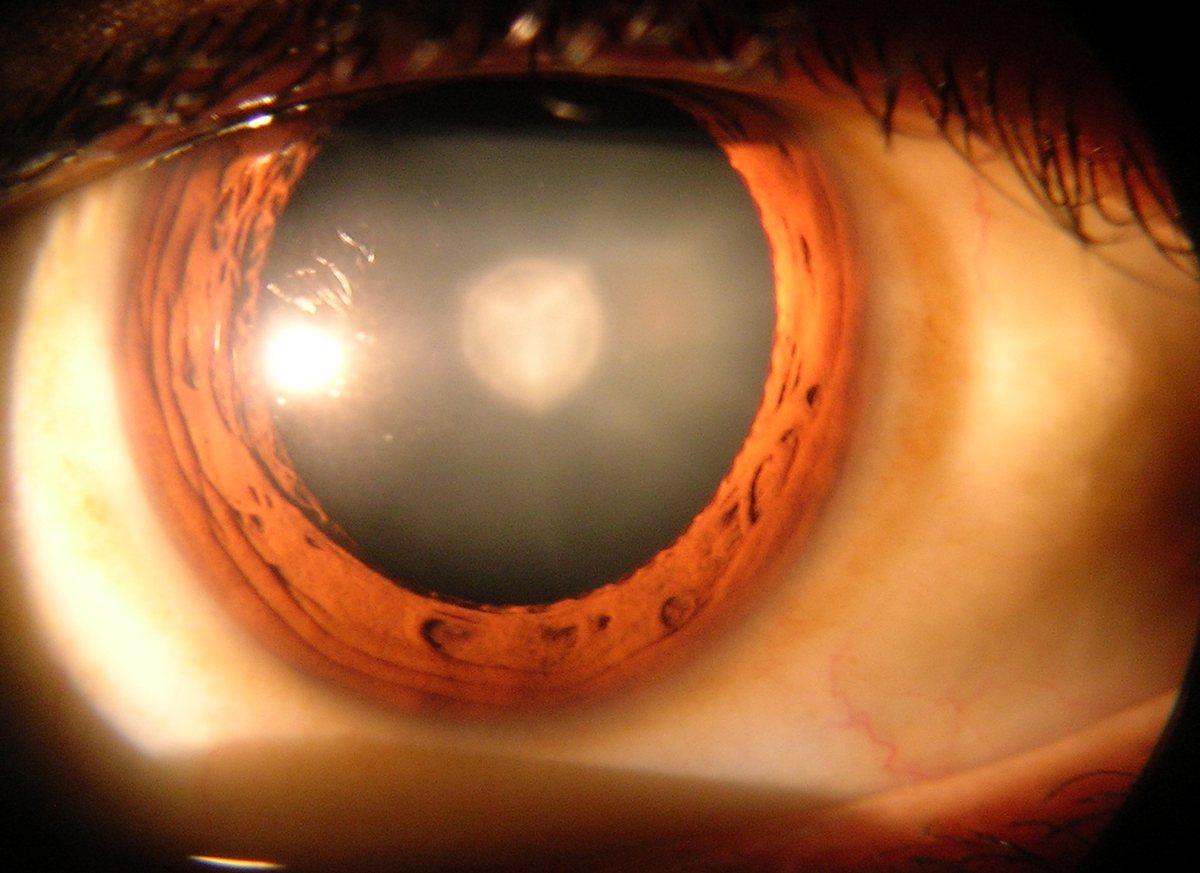
There is no single test that determines “how much cataract there is.” Visual acuity on the eye chart is measured in a dark room and at high contrast, so it does not always reflect the difficulty in real life, for example when facing glare. The doctor combines what he sees in the lens with what you describe.
I have symptoms of cataract. What now?
Cataract is not an emergency. Schedule an exam with an ophthalmologist, without panic. In the early stages you can sometimes manage with updated glasses, better lighting for reading and sunglasses against glare. There are no drops or medications that restore the clarity of the lens. Once your vision is interfering with everyday life, the solution is surgery in which the cloudy lens is replaced with a clear artificial lens.
Further reading: when to have cataract surgery, the complete guide to cataract, and information on cataract surgery with Dr. Stern in Jerusalem.
Frequently asked questions
What is the first symptom of cataract?
In most people the first sign is gradual blur, glare when driving at night or a need for stronger light for reading. Sometimes the first sign is a frequent change in the glasses prescription. Because the change is slow, many people discover their cataract only at a routine eye exam.
Does a cataract cause pain or redness in the eye?
No. An ordinary cataract is not painful and does not cause redness. Pain, redness or a sudden drop in vision point to a different problem and call for an urgent exam. Only in rare cases can a very advanced cataract that has been neglected for years cause a sharp, painful rise in eye pressure.
At what age do cataract symptoms appear?
The risk of cataract rises gradually from about age 40, and most patients notice it in their 60s and 70s. According to data from the United States, by age 80 more than half of people have a cataract. In people with diabetes, after long-term steroid treatment or after trauma to the eye, it may appear earlier.
Does cataract appear in both eyes?
Usually yes, but not always to the same degree or at the same pace. Often one eye is ahead of the other. A cataract in one eye only raises suspicion of a local cause, such as an old injury, inflammation in the eye or previous eye surgery.
Suddenly I can read without reading glasses. Is that a good sign?
Not necessarily. A sudden improvement in reading without glasses at an older age is sometimes caused by a nuclear cataract, which increases the refractive power of the lens. The phenomenon is known as second sight. It is temporary, and later on vision becomes blurred both for near and for distance. It is worth having an exam.
Can you see a cataract in the mirror?
Usually not. In most cases the pupil looks black as usual, and the clouding can be seen only with the ophthalmologist's microscope, after the pupil is dilated. A white or gray pupil that is visible to the naked eye appears only in a very advanced cataract.
References
- Olson RJ, Braga-Mele R, Chen SH, et al. Cataract in the Adult Eye Preferred Practice Pattern. Ophthalmology. 2017;124(2):P1-P119. Link
- Tsai LM, Afshari NA, Brasington CR, et al. 2022-2023 Basic and Clinical Science Course, Section 11: Lens and Cataract. San Francisco: American Academy of Ophthalmology; 2022.