

In cataract surgery the clouded natural lens is replaced with an intraocular lens (IOL), and the lens chosen determines how you will see after surgery and how much you will depend on glasses. No single lens is best for everyone: the choice depends on your eye measurements, the health of the eye and your lifestyle.
A quick comparison of lens types
| Lens type — and who it suits | Distance | Intermediate (computer) | Near (reading) | Night halos and glare |
|---|---|---|---|---|
| Monofocal Those who want the highest quality distance vision and don’t mind reading glasses | Excellent | Usually with glasses | With reading glasses | Minimal |
| Toric monofocal Significant corneal astigmatism | Excellent, even with astigmatism | Usually with glasses | With reading glasses | Minimal |
| Multifocal / trifocal Those who want to substantially reduce dependence on glasses, in a healthy eye | Good | Good | Good | More common |
| EDOF (extended depth of focus) Continuous distance and intermediate vision with fewer halos | Excellent | Very good | Moderate — large print | Fewer than multifocal (design-dependent) |
| Monovision (monofocal lenses) Those who adapt well to different vision in each eye | In the dominant eye | Partial | In the other eye | Minimal |
The table is a general overview; actual results depend on the eye and the specific lens.
Cataract surgery is not just a procedure aimed at restoring transparency to the eye; it is also a personalized refractive procedure. When the clouded natural lens is removed, it must be replaced with a permanent artificial implant called an intraocular lens, or IOL.
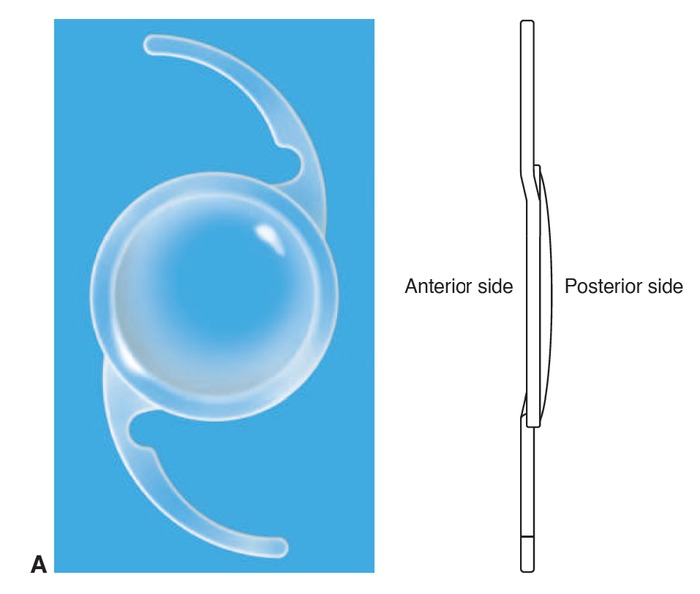
Modern IOL Materials and Design
Modern IOLs are made of soft, flexible materials - mainly acrylic, and sometimes silicone - that allow them to be folded and injected through a tiny incision. These materials are highly durable and designed to remain transparent within the eye for a lifetime. In patients who may need future retinal surgery involving silicone oil, I generally avoid implanting a silicone lens, since the oil can adhere to it and impair vision.
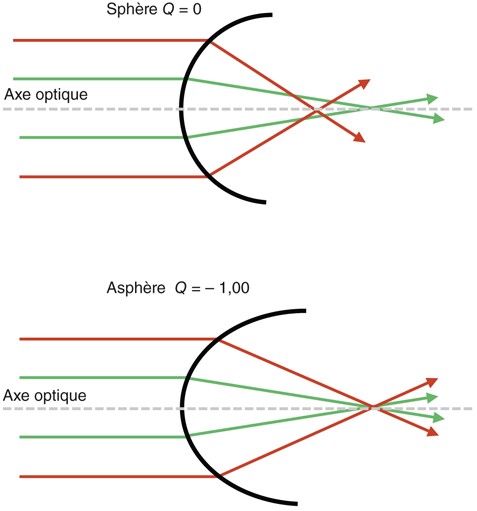
Lens design also has clinical significance: the sharp, square posterior edges common today significantly reduce the risk of later posterior capsule opacification (PCO) compared with older designs; and an "aspheric" optical design improves visual acuity and vision in low-light conditions, such as night driving.
Classification of Intraocular Lenses (IOL): Choosing a Focusing Range
Surgeons today have a wide range of IOL platforms available, allowing the visual outcome to be tailored to the patient's lifestyle, career, and personal hobbies.
Broadly speaking, there are three main groups:
- Monofocal lenses: A single, sharp focus point, usually for distance; reading glasses are needed in most cases.
- Astigmatism-correcting lenses: Toric lenses designed to correct existing astigmatism.
- Premium presbyopia-correcting lenses: Multifocal and EDOF options that provide additional ranges of vision.
1. Monofocal Lenses - The Traditional Option
Monofocal lenses are designed to provide very sharp, high-contrast vision at a single focal distance - usually set for distance vision, that is, emmetropia.
How it works: If both eyes are targeted for distance emmetropia, sharp, good vision can be expected for driving, watching television, and walking. However, since a monofocal lens cannot change shape and accommodate, reading glasses will usually be needed both for intermediate tasks - such as using a computer or cooking - and for near tasks, such as reading a book, using a phone, or sewing.
Targeting for myopia: Patients who have been nearsighted their whole lives and enjoyed reading without glasses can choose to target monofocal lenses for near vision - that is, for myopia. In this case, they will be able to read without glasses but will need glasses for distance vision, for example for driving and outdoor activities.
2. Toric Lenses - Astigmatism Correction
Astigmatism occurs when the cornea has different curvatures in different meridians, causing light to focus unevenly and producing blurred or distorted vision at all distances. About 40% of patients undergoing cataract surgery have corneal astigmatism of 1.00 diopter or more, and about 15% to 20% have significant astigmatism of 1.50 diopters or more - a level that usually justifies the use of a dedicated toric lens.
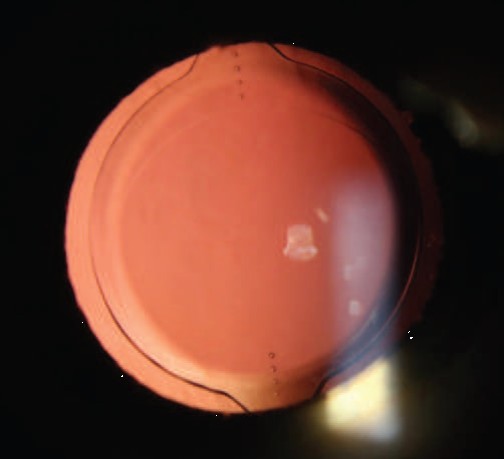
How they work: Standard IOLs do not correct astigmatism. A toric IOL is a specialized lens with different focusing powers in different directions. During surgery, I align the markings on the toric lens precisely with the patient's corneal astigmatism axis.
The importance of alignment: Precision is critical. For every one degree that a toric lens rotates away from its planned axis, it loses approximately 3% of its astigmatism-correcting power. I sometimes use advanced guidance systems during surgery to achieve the most accurate positioning possible.
For the disadvantages and limitations of toric lenses, see Question 7 in the FAQ.
Difficulty With Near Vision After Cataract Surgery, When the Target Is Distance Vision
Patients who choose a monofocal lens - standard or toric - targeted for distance vision may find that they need reading glasses after surgery. This is an expected result of the type of lens, not a complication. Some patients find over time that the dependence on reading glasses is more bothersome than they expected. The simplest and most common solution is to wear reading glasses; for those who wish to further reduce dependence on glasses after surgery, dedicated presbyopia-correction methods are available, detailed below.
Patients who are not satisfied with the refractive outcome after cataract surgery - for example, a larger-than-expected residual refractive error at any distance - should not have to settle for the result. There are two main approaches to correction: additional laser surgery on the cornea (PRK or LASIK) for fine-tuning the focus, or adding a supplementary intraocular lens (piggyback IOL) over the existing lens, without removing it. In select cases, surgical exchange of the intraocular lens itself may also be considered. The appropriate choice depends on the cause of the residual refractive error and the characteristics of the eye, and it's recommended to consult with your surgeon.
3. Methods for Correcting Presbyopia
Anyone who wants to reduce dependence on reading glasses - not just achieve astigmatism correction or sharp distance vision - can consider one of the following methods.
Monovision in Pseudophakia
Monovision is a personalized technique designed to reduce dependence on glasses using standard monofocal lenses.
How it works: I implant a lens targeted for distance in the dominant eye and a lens targeted for near vision in the non-dominant eye.
The result: The brain naturally combines the two images, so that one eye provides mainly distance vision and the other eye provides mainly near vision.
Variations: Traditional monovision creates a larger difference in focus, of about minus 1.50 to minus 2.50 diopters. This can provide very good near vision, but may slightly reduce depth perception. Mini-monovision, or modified monovision, uses a more moderate difference of about minus 0.50 to minus 1.50 diopters; this better preserves depth perception while still providing good intermediate vision, for example for computer use.
Multifocal Lenses - Bifocal and Trifocal Premium Lenses
Multifocal intraocular lenses (MFIOLs) are designed to provide clear vision at multiple distances simultaneously, thereby significantly reducing - and sometimes eliminating - dependence on glasses.
How they work: These lenses use diffractive or refractive concentric rings on the surface of the optic. The rings physically split incoming light: some light rays are focused for distance, and some for intermediate or near range. Modern trifocal lenses, such as the Alcon PanOptix, provide three distinct focal points: distance, intermediate vision (for example, computer distance), and near vision (reading distance).
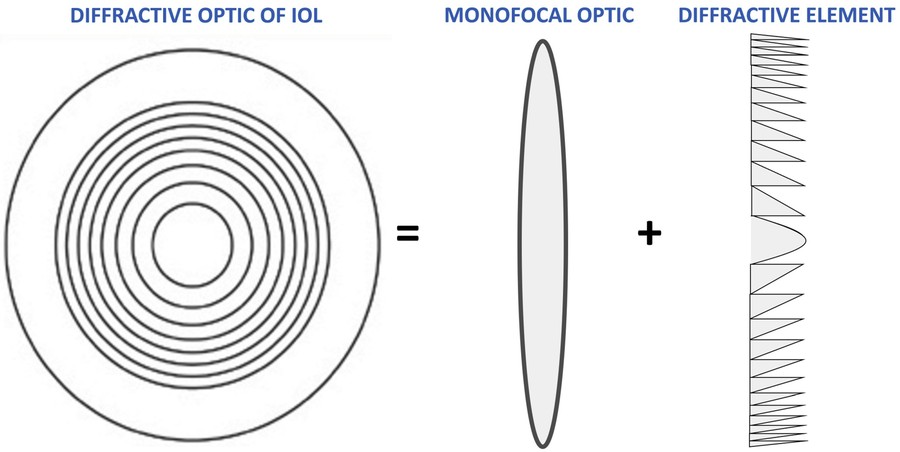
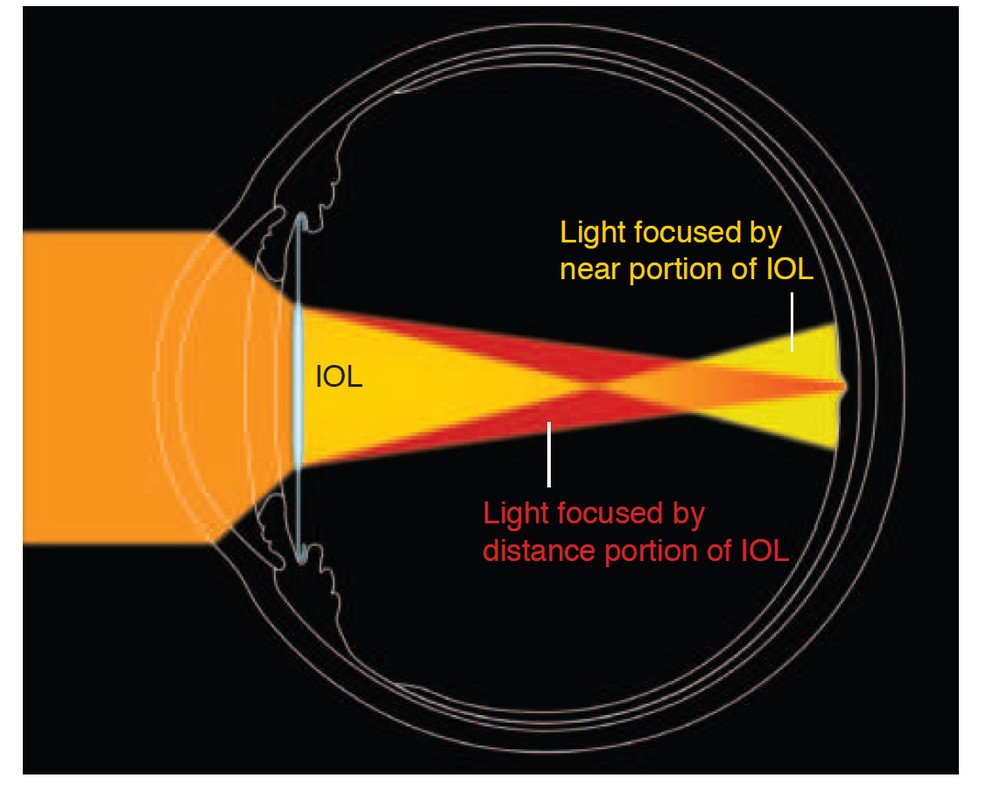
Drawbacks: Splitting light inherently causes some loss of contrast sensitivity, so images may appear slightly dimmer in dark rooms. In addition, the concentric rings can cause optical phenomena called dysphotopsias, including glare, halos, and starburst light scatter around light sources, especially when driving at night.
Patient selection: MFIOLs are premium lenses that require a very healthy eye. They are not recommended for patients with existing dry eye disease, corneal scarring, advanced glaucoma, macular degeneration, or epiretinal membranes, since these conditions can add to the impairment in contrast sensitivity and lead to an unsatisfactory visual outcome.
EDOF Lenses - Extended Depth of Focus
Extended Depth of Focus (EDOF) lenses are a modern advance in technologies designed to reduce dependence on glasses due to presbyopia.
How they work: Instead of splitting light into several separate, distinct focal points, as multifocal lenses do, EDOF lenses use dedicated diffractive or non-diffractive designs - such as Alcon's Vivity or Johnson & Johnson's Symfony - to stretch and extend the eye's single focal point, creating a continuous, extended range of vision.
Range of vision: EDOF lenses provide excellent, high-contrast vision at distance and intermediate range - for example, for the dashboard, computer, and countertop - with fewer halos and less glare compared with traditional multifocal lenses. With non-diffractive designs such as Vivity, the night-driving profile is largely similar to that of standard monofocal lenses; with diffractive designs such as Symfony, halos and glare are more common than with a monofocal lens, though less than with a trifocal.
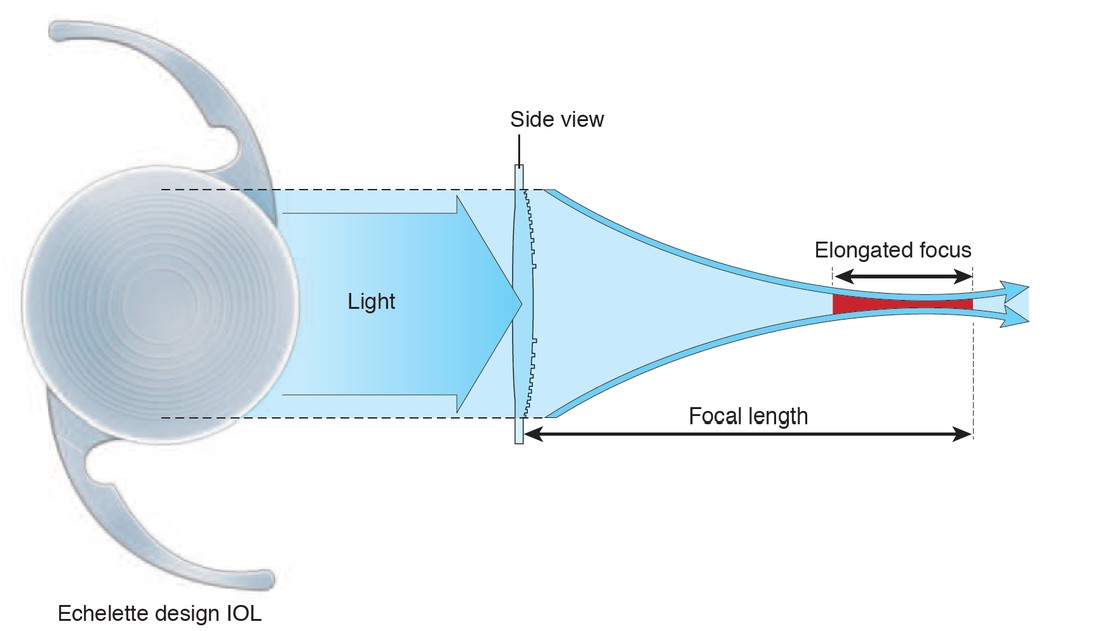
Near vision: Because the focus is elongated rather than split into a dedicated near point, EDOF lenses provide moderate near vision. Many patients can comfortably read large text but may need weak reading glasses for very small text or reading in dim light. To improve near vision, some surgeons combine mini-monovision with EDOF lenses, targeting the non-dominant eye for very mild myopia of about minus 0.50 diopters.
How a lens is chosen — and how Dr. Stern does it
The choice is made together at the planning visit, based on precise measurements of the eye, an assessment of its health and a conversation about your lifestyle. Dr. Stern founded and heads the Biomedical Optics Research Laboratory at Hadassah, where the real optical properties of intraocular lenses are measured, and his research on the subject has been published in leading journals. He is also co-founder of AIOLsci, a platform for objectively choosing the right lens for each eye, which won the ISRS RefracTech Innovator Award 2026.
Frequently asked questions
Which intraocular lens is best?
No single lens is best for everyone. A monofocal lens gives sharp distance vision with reading glasses; a toric lens corrects astigmatism; multifocal and EDOF lenses reduce dependence on glasses, at the cost of halos and some loss of contrast. The right lens depends on the eye and your lifestyle.
Can I see without any glasses after cataract surgery?
Multifocal lenses can substantially reduce — and sometimes eliminate — dependence on glasses. With an EDOF lens most patients see well at distance and intermediate range, but may need weak reading glasses for very small print or reading in dim light.
What is the difference between a multifocal and an EDOF lens?
A multifocal lens splits light into several separate focal points — distance, intermediate and near. An EDOF lens stretches a single focus into a continuous range of distance and intermediate vision, with fewer halos but only moderate near vision.
What are the disadvantages of a toric lens?
It involves an additional charge; it may rotate slightly off axis and lose part of its correction (about 3% per degree); some residual astigmatism may remain; and it does not correct near vision unless a multifocal or EDOF toric lens is chosen. Full details in the guide
Does an intraocular lens last for life?
Yes. Modern lenses are made of very durable materials and are designed to stay clear inside the eye for life. If vision becomes blurred years after surgery, the cause is usually secondary cataract, not the lens.
Who is not suited to a multifocal lens?
Multifocal lenses require a very healthy eye and are generally not recommended with dry eye disease, corneal scarring, advanced glaucoma, macular degeneration or epiretinal membranes.