

In brief
- Instructions-for-use (IFU) leaflets of 28 lens models were collected and weighed. The mean weight was 17.6 g, ranging from 1.4 g (e-IFU) to 53.7 g (a booklet in 25 languages).
- With about 8.7 million cataract surgeries a year in Europe and the US, this amounts to about 153 tons of paper a year.
- A full move to electronic instructions for use (e-IFU) would bring the amount down to about 25 tons: a saving of 128 tons (84%) a year.
- The main barrier: at the time of the study, e-IFUs were still not permitted in about 60 countries, and manufacturers prefer a single packaging line for the whole world.
What does this mean for patients?
Every lens implanted in cataract surgery comes with a printed instruction booklet that is almost never read. The study measured how much paper is wasted this way, and showed that a small QR code can replace most of the booklets. This has no effect whatsoever on the surgery, on the lens or on patient safety; it is a small step toward reducing operating room waste.
How it started
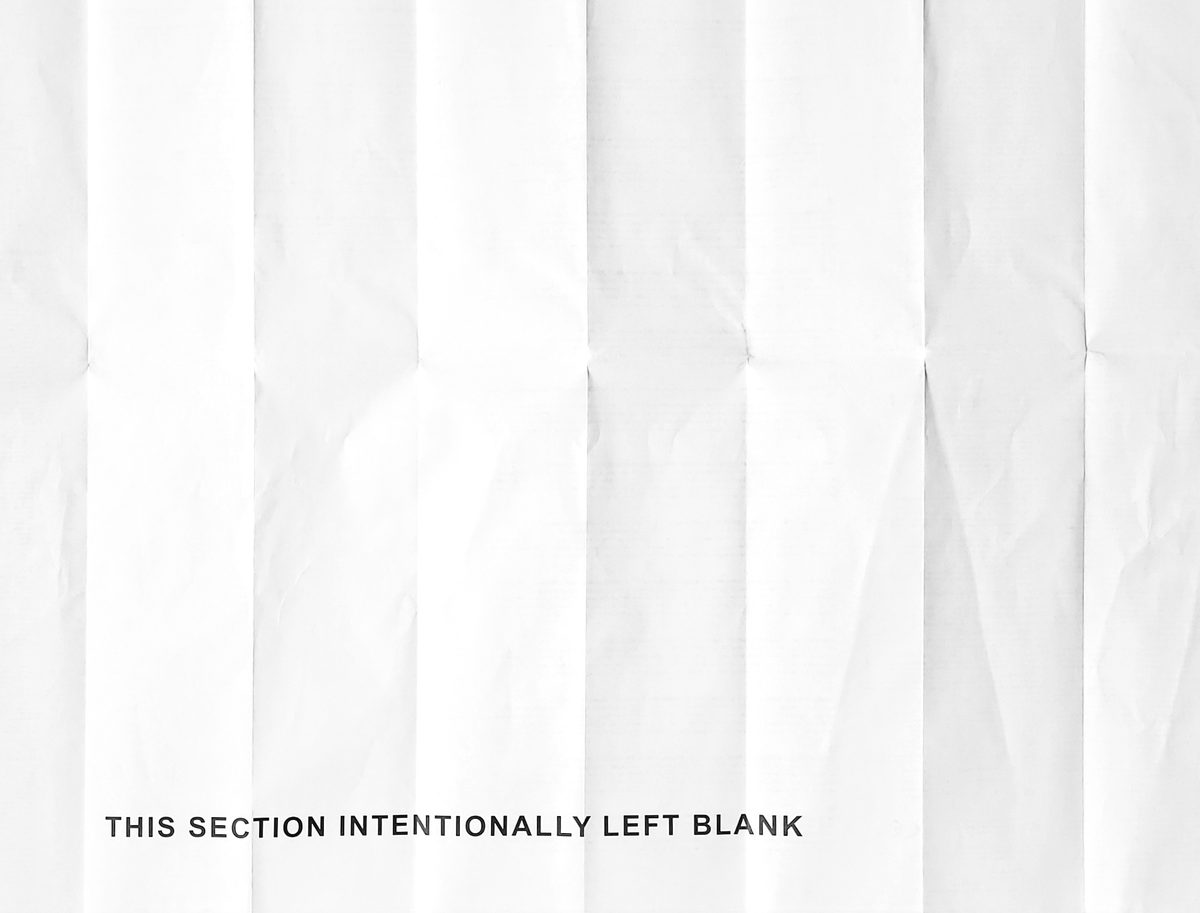
The question came up when Dr. Benjamin Stern found, in one of the leaflets, an entire page printed with nothing but “THIS SECTION INTENTIONALLY LEFT BLANK.” Another booklet contained instructions in more than 20 languages and 24 blank pages. These leaflets come in every lens box, and the staff usually throw them away in the operating room without anyone reading them.
The study is the first from the Green Working Group of AECOS. Dr. Stern led it together with Radhika Rampat and David Shahnazaryan, under the guidance of Damien Gatinel, at the Rothschild hospital in Paris, at the Royal Free London NHS Foundation Trust and at the Center for Sight in London.
Method
IFU leaflets of 28 different lens models were collected. Each leaflet was weighed and assigned to one of three categories:
- Classic IFU: a printed booklet in many languages.
- Hybrid IFU: a QR code for countries that accept electronic instructions, alongside printed instructions in the languages of countries that do not.
- e-IFU: only a small slip of paper that refers the user to the online instructions; in all but one of the models examined, by means of a QR code.
The lenses were selected from the stock of the three centers, regardless of their type of leaflet. The annual amount of paper was estimated as the mean weight multiplied by the number of cataract surgeries in Europe and the US, about 8.7 million a year. The conversions: about 942 kg CO2eq per ton of paper, 400 reams of copy paper per ton and about 17 trees per ton.
Results
| Type of leaflet | Number of models | Mean weight |
|---|---|---|
| Classic IFU (printed booklet) | 18 | 23.5 g |
| Hybrid IFU (QR + printed instructions) | 3 | 16.6 g |
| e-IFU (slip with a QR code) | 7 | 2.9 g |
| All models | 28 | 17.6 g |
The heaviest leaflet weighed 53.7 g and contained explanations in 25 languages; the lightest e-IFU weighed only 1.4 g. The mean weight of an e-IFU was more than 6 times smaller than the overall mean, and at the time of the study only two manufacturers had moved to e-IFU completely.
- At the time of the study: 17.6 g × 8.7 million surgeries ≈ 153 tons of paper a year, equivalent to about 2,700 trees and about 149 tons of CO2eq in paper production.
- If all manufacturers moved to e-IFU: 2.9 g × 8.7 million ≈ 25 tons a year.
- The saving: 128 tons a year (84%) (153 − 25 = 128), equivalent to more than 50,000 reams of copy paper, about 2,200 trees and about 120 tons of CO2eq a year.
To keep things in proportion: according to an earlier single-center study cited in the paper, a cataract surgery generates about 827 g of waste, and the paper packaging of the lens (box and leaflet) accounts for about 7.4% of it. The leaflet itself is about 28% of the paper packaging and about 2% of the total waste of the surgery. The authors see it as an easy first step to implement, not as the heart of the problem.
Study limitations
- The calculation is based on estimates: the annual number of surgeries and the ratio of trees to a ton of paper, and it does not take recycling into account.
- The sample came from three large centers in Paris and London, and may not represent the entire European and American market.
- The market share of each lens and manufacturer was not weighted, because the data are not public.
Why are printed leaflets still in use?
e-IFUs are permitted in Europe and the US, but at the time of the study (2023) they were still not permitted in about 60 countries, including South Africa, Russia and China. A manufacturer that markets worldwide then needs two packaging lines, with and without a paper leaflet, and many continue to print booklets in dozens of languages; this is how such booklets reach the operating room even in countries that accept e-IFUs. The regulatory requirements that accompany the move to e-IFU in Europe and the US also slow it down.
e-IFUs also have practical advantages: there is no space limit, videos can be included, they are easy to update and correct without a product recall, and the surgeon can consult the instructions on a screen without compromising sterility.
What can be done, according to the study:
- Regulatory authorities in the US and Europe can promote recognition of e-IFUs in countries that do not yet accept them.
- Manufacturers can move at least to a hybrid leaflet: a QR code for the countries that accept it, and printed instructions only in the languages of the countries that do not. The leaflet then becomes smaller and lighter.
Along the same lines, a multisociety position paper by EyeSustain, endorsed by the AAO, ASCRS and ESCRS, was published in 2024: it recommends that manufacturers move to a QR code that links to an e-IFU, and calls on the regulatory authorities in every country to permit and encourage this.
And what can be done in the department?
- Ask your lens suppliers whether an e-IFU version or a hybrid version exists for the local market.
- Include packaging and waste considerations in supplier selection and tenders; the paper recommends that surgeons favor the more compact and more environmentally friendly packaging.
- Collect clean paper from lens packaging for recycling, where hospital procedures allow it.
A snowball effect
Ophthalmologists are far more aware of sustainability today, and many manufacturers are already moving to e-IFUs and greener packaging. The study also prompted follow-up studies: researchers in gynecology used the same approach to examine the paper waste in the leaflets of contraceptive pills, in a study in which Dr. Stern took part (PLoS One, 2024). Dr. Stern also examined the ecological footprint of the distribution of intraocular lens models in a large eye center (Eye, 2025). The publications appear in the list of research and publications.
The paper: Stern B, Rampat R, Shahnazaryan D, Gatinel D. Paper waste from instructions for use brochures in cataract surgery implant packaging in Europe and the United States. J Cataract Refract Surg. 2024;50(1):72–77. Read the paper.
References
- Stern B, Rampat R, Shahnazaryan D, Gatinel D. Paper waste from instructions for use brochures in cataract surgery implant packaging in Europe and the United States. J Cataract Refract Surg. 2024;50(1):72-77. Link
- Schehlein EM, Hovanesian J, Shukla AG, Talley Rostov A, Findl O, Chang DF. Reducing ophthalmic surgical waste through electronic instructions for use: a multisociety position paper. J Cataract Refract Surg. 2024;50(3):197-200. Link
- Chang DF. Tackling the challenge of needless surgical waste in ophthalmology. J Cataract Refract Surg. 2023;49(4):333-338. Link
- Khor HG, Cho I, Lee KRCK, Chieng LL. Waste production from phacoemulsification surgery. J Cataract Refract Surg. 2020;46(2):215-221. Link