

In brief
- Cross-linking (CXL) is a treatment that stiffens the cornea with riboflavin drops (vitamin B2) and ultraviolet light, and in this way halts the progression of keratoconus.
- The goal is to halt the disease, not to correct vision. After the treatment you will still need glasses or contact lenses.
- The treatment is offered when the tests show that the disease is progressing, and it is better not to wait: the results are better in mild to moderate disease.
- In the oldest and most studied method, the outer cell layer of the cornea is removed (“epi-off”). Recovery is painful for a few days, and vision stabilizes over months.
- In follow-up of 10 to 15 years, the cornea remained stable in most patients. Complications that damage vision are not common, but they do exist.
What is cross-linking, and what does it do?
In keratoconus the cornea, the clear window at the front of the eye, weakens, thins and bulges forward. Cross-linking (Corneal Cross-Linking, the cross-linking of collagen) strengthens it. Riboflavin (vitamin B2) drops are placed on the cornea, and it is then exposed to ultraviolet light of the UVA type. The combination creates new chemical bonds between the collagen fibers, and the cornea becomes stiffer. A similar process also takes place in the cornea naturally, slowly, with age.
The treatment was developed at the University of Dresden in Germany and has been in use around the world for more than twenty years. It is the only treatment proven to slow or halt the progression of keratoconus.
It is important to set expectations: cross-linking does not restore vision that has already been lost and does not free you from glasses. In some patients the cornea flattens slightly and vision improves slightly, but that is a bonus, not the goal.
Who needs cross-linking?
- Progressive keratoconus: when repeated corneal maps show that the cornea is becoming steeper or thinner, or that the prescription and vision are getting worse.
- High risk of progression: in young patients the doctor will sometimes recommend treating early, because at that age the disease progresses quickly.
- Ectasia after laser eye surgery: a rare condition in which the cornea weakens and bulges after vision correction surgery.
When the disease has been stable over time, follow-up is usually enough. The treatment is more effective in mild to moderate disease, and in advanced disease the results are less predictable. That is why it is not a good idea to put off the evaluation.
There are situations in which the treatment is not suitable, or needs to be adapted: a very thin cornea (less than about 400 microns, for which there are special protocols), a history of herpes in the eye, a significant corneal scar, severe dry eye or difficulty with healing of the surface of the eye, and certain autoimmune diseases.
How is the treatment done?
The treatment is done in a clinic or a treatment room, under anesthesia with drops, and you go home afterward. With the standard method (the “Dresden protocol”) it takes more than an hour:
- Numbing drops are given, and the doctor gently removes the outer cell layer (the epithelium) from the center of the cornea, so that the riboflavin can penetrate deep into it.
- Riboflavin drops are given every few minutes, for about half an hour, and the corneal thickness is checked to make sure it is sufficient.
- The cornea is exposed to UVA light for about half an hour, while the riboflavin drops continue.
- A soft contact lens is placed on the eye to serve as a “bandage” until the epithelium has healed.
Epi-off, epi-on and accelerated treatment: what is the difference?
Over the years, shorter and more comfortable versions of the treatment have been developed. This is what is known about them as of 2026:
| Method | What to do | What is known |
|---|---|---|
| Standard epi-off (“Dresden”) | The epithelium is removed, and the light is applied for about half an hour. | The oldest and most studied method, with follow-up of 10 to 15 years. |
| Accelerated epi-off | The epithelium is removed, and the same amount of light is delivered at a higher intensity over a shorter time, for example about ten minutes. | In meta-analyses of controlled trials, halting of the disease in the first year is similar to the standard method, and the flattening of the cornea is slightly smaller. Five-year follow-up is already available. |
| Epi-on (without removing the epithelium) | The epithelium is left in place. | Less pain and fewer complications, but the epithelium makes it harder for the riboflavin to penetrate. In a meta-analysis of 12 controlled trials (2021), the method was safer and less effective at halting the disease. A Cochrane review from the same year concluded that the evidence is still insufficient to decide. |
Newer versions of epi-on try to improve its effectiveness, and at the end of 2025 an epi-on treatment for keratoconus was approved in the United States for the first time. Long-term experience with them is still accumulating. The protocol is chosen by the treating doctor, according to the corneal thickness, age and rate of progression. The treatment is performed in centers that specialize in the cornea.
Recovery after cross-linking
- The first days: after epi-off treatment, expect pain, burning, tearing and light sensitivity until the epithelium has closed. In studies this usually happened within three to five days, and the doctor then removes the bandage contact lens.
- Drops: antibiotic and anti-inflammatory drops in the first weeks, according to the instructions you receive.
- Vision: blurred in the first days. In the large U.S. trial, one month after treatment the cornea and vision were even slightly worse than before it, and only afterward was there a gradual improvement, which continued for up to a year.
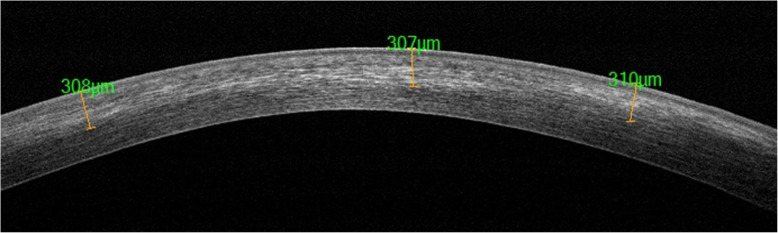
- Mild corneal haze: very common in the first months. It usually does not affect vision and clears within a year.
- What not to do: do not rub the eye. Do not let water get into the eye, do not swim and do not wear makeup until the doctor approves. If the bandage contact lens falls out, do not put it back in, and contact the clinic that is treating you.
- Getting back to your routine: it is a good idea to plan for a few days of rest. Driving, contact lenses and new glasses: only with the doctor's approval. The prescription is refitted after the cornea has stabilized.
Risks and side effects of cross-linking
Cross-linking is considered a safe treatment, but like any procedure on the eye it has risks:
- Common and temporary: pain and light sensitivity in the first days, mild corneal haze and a temporary decrease in corneal sensation.
- Less common: slow healing of the epithelium, non-infectious inflammatory infiltrates in the cornea, and a scar in the center of the cornea. In one prospective study, about 3% of eyes lost two or more lines on the eye chart.
- Rare and serious: corneal infection (in the U.S. trial: one case out of about 290 eyes), reactivation of herpes in the eye, corneal melting, and damage to the inner layer of the cornea that causes persistent edema. This last risk is reduced by checking the corneal thickness before the light is applied.
- Continued progression: according to the studies, in about 2% to 8% of eyes the disease continues to progress in the first year despite the treatment. In that case, repeat treatment can be considered.
Complications and failures are more common over age 35 and in a very steep cornea, one more reason not to put off treatment of progressive disease.
Results: what do the long-term studies show?
- The U.S. multicenter trial (2017): 205 patients were randomly assigned to treatment or to sham treatment. After one year, the cornea in the treated eyes had flattened by an average of 1.6 diopters, and in the untreated eyes it had become steeper by one diopter. In about a quarter of the treated eyes, vision with glasses improved by two or more lines, and in about 6% it dropped by two or more lines.
- The Siena study in Italy (2010): 44 eyes followed for four years or more remained stable. In the second eyes of the same patients, which had not yet been treated, the disease progressed in most cases within two years.
- The Dresden follow-up (2015 and 2023): ten years after treatment the cornea was flatter than before it, and the disease was stable. No change was found between year ten and year fifteen either, but about 14% of eyes needed repeat treatment over the years.
- Fewer corneal transplants: in the Netherlands, the number of corneal transplants for keratoconus fell by about a quarter after the treatment came into widespread use.
Keep in mind that the long follow-up studies are relatively small case series, with no control group. Even so, the picture is consistent: in most patients the treatment halts the disease for many years.
When should you see a doctor?
Before treatment: if you have keratoconus and your prescription is changing, your vision is dropping or your lenses no longer sit well, ask for a repeat corneal map. Progression is the reason to treat.
Even after successful treatment, follow-up with corneal mapping continues, and you should keep avoiding eye rubbing.
Frequently asked questions
Does cross-linking hurt?
The treatment itself is done under anesthesia with drops and does not hurt. After treatment with the epi-off method, in which the outer cell layer of the cornea is removed, expect pain, burning and light sensitivity for a few days, until the layer has healed. With the epi-on method there is less pain, but according to the studies the effectiveness in halting the disease is also lower.
Does cross-linking improve vision?
The goal is to halt the disease, not to improve vision. In the large U.S. trial, in about a quarter of the treated eyes vision with glasses improved by two or more lines, in most eyes it did not change significantly, and in about 6% it dropped. After the treatment you will still need glasses or contact lenses.
How long does the treatment last?
In follow-up of 10 to 15 years, the cornea remained stable in most patients. In the 15-year follow-up, about 14% of eyes needed repeat treatment. That is why follow-up with corneal mapping continues even after successful treatment.
Can the treatment be repeated if the disease continues to progress?
Yes. In a minority of eyes the disease continues to progress despite the treatment, and the doctor can then consider repeat treatment.
Which is better, epi-off or epi-on?
Epi-off is the oldest method, with the strongest evidence and follow-up of 10 to 15 years. Epi-on is more comfortable and safer, but in a meta-analysis of controlled trials it was less effective at halting the disease, and a Cochrane review concluded that the evidence is still insufficient to decide. Newer versions of epi-on are being evaluated. The method is chosen by the treating doctor.
Can I have laser vision correction after cross-linking?
No. Laser vision correction is strictly contraindicated in keratoconus, even after cross-linking: even when the disease has been halted, the cornea remains thin and irregular.
References
- American Academy of Ophthalmology. Basic and Clinical Science Course (BCSC) 2025–2026, Section 8: External Disease and Cornea. Chapter 9: Clinical approach to corneal ectatic disease. San Francisco: AAO; 2025.
- Hersh PS, Stulting RD, Muller D, Durrie DS, Rajpal RK; United States Crosslinking Study Group. United States multicenter clinical trial of corneal collagen crosslinking for keratoconus treatment. Ophthalmology. 2017;124(9):1259-1270. Link
- Raiskup F, Theuring A, Pillunat LE, Spoerl E. Corneal collagen crosslinking with riboflavin and ultraviolet-A light in progressive keratoconus: ten-year results. J Cataract Refract Surg. 2015;41(1):41-46. Link
- Caporossi A, Mazzotta C, Baiocchi S, Caporossi T. Long-term results of riboflavin ultraviolet A corneal collagen cross-linking for keratoconus in Italy: the Siena Eye Cross Study. Am J Ophthalmol. 2010;149(4):585-593. Link
- Nath S, Shen C, Koziarz A, et al. Transepithelial versus epithelium-off corneal collagen cross-linking for corneal ectasia: a systematic review and meta-analysis. Ophthalmology. 2021;128(8):1150-1160. Link
- Ng SM, Ren M, Lindsley KB, Hawkins BS, Kuo IC. Transepithelial versus epithelium-off corneal crosslinking for progressive keratoconus. Cochrane Database Syst Rev. 2021;3:CD013512. Link
- Kobashi H, Tsubota K. Accelerated versus standard corneal cross-linking for progressive keratoconus: a meta-analysis of randomized controlled trials. Cornea. 2020;39(2):172-180. Link
- Koller T, Mrochen M, Seiler T. Complication and failure rates after corneal crosslinking. J Cataract Refract Surg. 2009;35(8):1358-1362. Link