

In brief
- Contact lenses are safe when used correctly. The dangerous complication is a corneal infection: rare, but it can leave a scar and damage vision.
- With daily wear, the risk of infection is about one to two cases per 10,000 wearers per year. Sleeping in lenses raises it about tenfold.
- The three riskiest habits: sleeping in lenses, letting the lenses or the case come into contact with water, and a case that is not cleaned and not replaced.
- A red, painful eye, light sensitivity or blurred vision: take the lens out and see an ophthalmologist the same day.
- Before the measurements for cataract surgery, you stop wearing contact lenses in advance. Before laser eye surgery, you receive separate instructions.
Contact lenses: how big is the risk of corneal infection?
The real risk was measured in a large population study in Australia (2008), which tracked down every case of corneal infection in lens wearers over one year. With daily wear, meaning the lenses are taken out before sleep, there were about 1 to 2 cases per 10,000 wearers per year. In people who slept in their lenses, the rate was about ten times higher. Real damage to vision was rarer: about 0.6 cases per 10,000 wearers per year.
- Sleeping in lenses is the strongest and most consistent risk factor, across all lens types. In a large British study from the same year, it raised the risk about fivefold.
- Rigid lenses (gas-permeable) were linked to a lower risk than soft lenses.
- Daily disposable lenses did not eliminate the risk of infection, but when an infection did occur, it damaged vision less often.
Which habits raise the risk?
- Water: swimming, using a hot tub or showering with lenses in, and rinsing the lenses or the case with tap water. Acanthamoeba, a parasite that lives in water and soil, causes a rare but especially severe infection, mainly in contact lens wearers. In a U.S. study of rigid lens wearers, storing lenses in tap water and “topping off” old solution with new solution were linked to a much higher risk of this infection.
- A dirty case: a case that is not rinsed, not dried and not replaced. In the Australian study, these were among the main risk factors for moderate and severe infection.
- “Topping off” solution: adding fresh solution to old solution instead of replacing all of it.
- Lenses bought without an exam: buying online, and colored or “cosmetic” lenses that were not fitted by an eye care professional.
- Smoking, and according to some studies also the first months of lens wear, when habits are not yet established.
The rules that really matter
- Wash your hands with soap and water and dry them well every time before you touch your lenses.
- Do not sleep in lenses, not even “just a short nap,” unless your ophthalmologist has explicitly approved it.
- No water at all: take your lenses out before swimming and showering, do not rinse lenses or the case with tap water, and do not wet a lens with saliva.
- Fresh solution every time. Do not add solution to old solution.
- Rub and rinse the lenses with solution, following the instructions for the solution.
- After every use: rinse the case with solution, empty it, and leave it upside down and open to dry. Replace the case at least once every three months.
- Replace lenses on time, according to the lens type. A daily disposable lens is used once only.
- Buy lenses, including colored ones, only after an exam and a fitting, and come for a periodic exam, usually once a year.
- Always keep a pair of glasses within reach, so that you are not tempted to wear lenses when your eye is irritated.
Warning signs: when to take the lens out and see a doctor
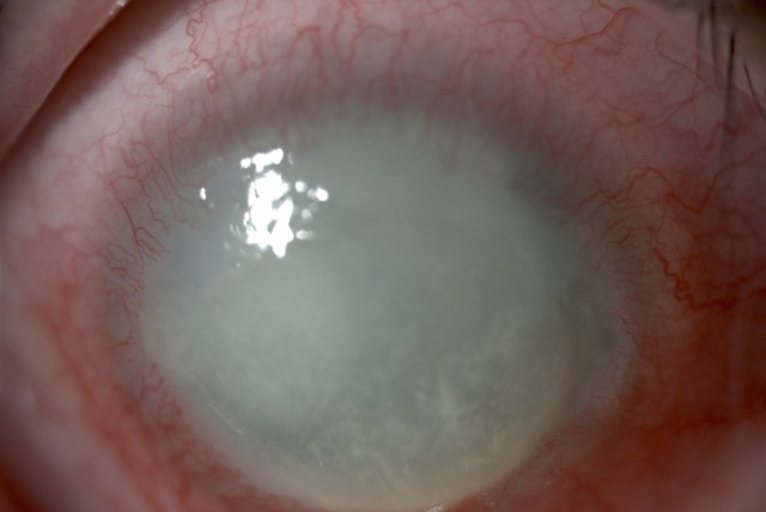
This is usually how a corneal ulcer or infection begins, and early treatment reduces the risk of scarring. Acanthamoeba infection sometimes begins with mild symptoms and is diagnosed late, sometimes after weeks of unsuitable treatment. That is why contact lens wearers with a red eye that is not improving need an exam by an ophthalmologist, and not just drops.
Dryness and discomfort with contact lenses
Contact lenses destabilize the tear film, and many wearers feel dryness, burning or tired eyes at the end of the day. Discomfort, and dryness in particular, is the most common reason people stop wearing lenses. What helps: shorter wearing hours, switching to a different lens type or solution with a professional fitting, lubricating drops that are suitable for contact lenses, and treating dry eye and eyelid inflammation when they are present: see dry eye. People diagnosed with keratoconus sometimes wear specialty lenses, and all the rules here apply to those lenses too.
Stopping contact lenses before the measurements for surgery
Contact lenses temporarily change the shape of the cornea, even after they are taken out. If the eye is measured before the cornea has returned to its natural shape, the calculation may come out inaccurate. That is why you stop wearing contact lenses before the corneal mapping and the measurements.
- Before cataract surgery: soft lenses are stopped two weeks before the measurements. Rigid lenses: at least three to four weeks, and sometimes longer after many years of wear; the measurement is repeated until it is stable. All the preparations are on the Before Cataract Surgery page.
- Before laser vision correction: you will receive separate instructions on how long before the tests you need to stop wearing lenses.
If the measurements show that the cornea has not yet stabilized, they are repeated after a further period without lenses.
When should you see an ophthalmologist?
- The same day: any of the warning signs above.
- At a regular appointment: dryness or discomfort that persists, a lens that does not sit well, vision that is less sharp with your lenses, or a periodic exam that is due.
Frequently asked questions
Is it OK to sleep in contact lenses?
Only if your ophthalmologist has explicitly approved it for a specific lens. Sleeping in lenses is the strongest risk factor for corneal infection: in a large Australian study, the rate in people who slept in their lenses was about ten times higher than with daily wear. It is best to avoid even a short nap with lenses in.
Can I swim with contact lenses?
It is better not to. Water in a pool, the sea, a hot tub and the shower can contain bacteria and the parasite Acanthamoeba, which causes a severe corneal infection. The recommendation is to take your lenses out before swimming and showering, and not to let water get into the lenses or the case. If your eye is red, painful or sensitive to light after contact with water, take the lens out and see an ophthalmologist.
Are daily disposable lenses safer?
They do away with the case and the solution, which are a common source of infection. In studies, they did not eliminate the risk of corneal infection, but when an infection did occur, it damaged vision less often. This holds provided that each lens is used once only and you do not sleep in it.
How long before cataract surgery do I need to stop wearing contact lenses?
Soft lenses are stopped two weeks before the measurements. Rigid lenses: at least three to four weeks, and sometimes longer after many years of wear; the measurement is repeated until it is stable. Before laser eye surgery you will receive separate instructions.
Can I buy colored lenses without a prescription?
It is not a good idea. Even a colored lens with no power is a contact lens in every respect, and it needs to fit the eye. Lenses bought without an exam and a fitting are linked to a higher risk of infection, partly because people who buy them do not receive instruction on wearing and cleaning them.
References
- Stapleton F, Keay L, Edwards K, et al. The incidence of contact lens-related microbial keratitis in Australia. Ophthalmology. 2008;115(10):1655-1662. Link
- Dart JK, Radford CF, Minassian D, Verma S, Stapleton F. Risk factors for microbial keratitis with contemporary contact lenses: a case-control study. Ophthalmology. 2008;115(10):1647-1654. Link
- Stapleton F, Edwards K, Keay L, et al. Risk factors for moderate and severe microbial keratitis in daily wear contact lens users. Ophthalmology. 2012;119(8):1516-1521. Link
- Cope JR, Collier SA, Schein OD, et al. Acanthamoeba keratitis among rigid gas permeable contact lens wearers in the United States, 2005 through 2011. Ophthalmology. 2016;123(7):1435-1441. Link
- Zimmerman AB, Nixon AD, Rueff EM. Contact lens associated microbial keratitis: practical considerations for the optometrist. Clin Optom. 2016;8:1-12. Link
- Centers for Disease Control and Prevention. Contact lenses: prevention and healthy habits (web page, accessed November 2026). Link